
Season Guide 2026 – 2027
When to Cruise
Raja Ampat
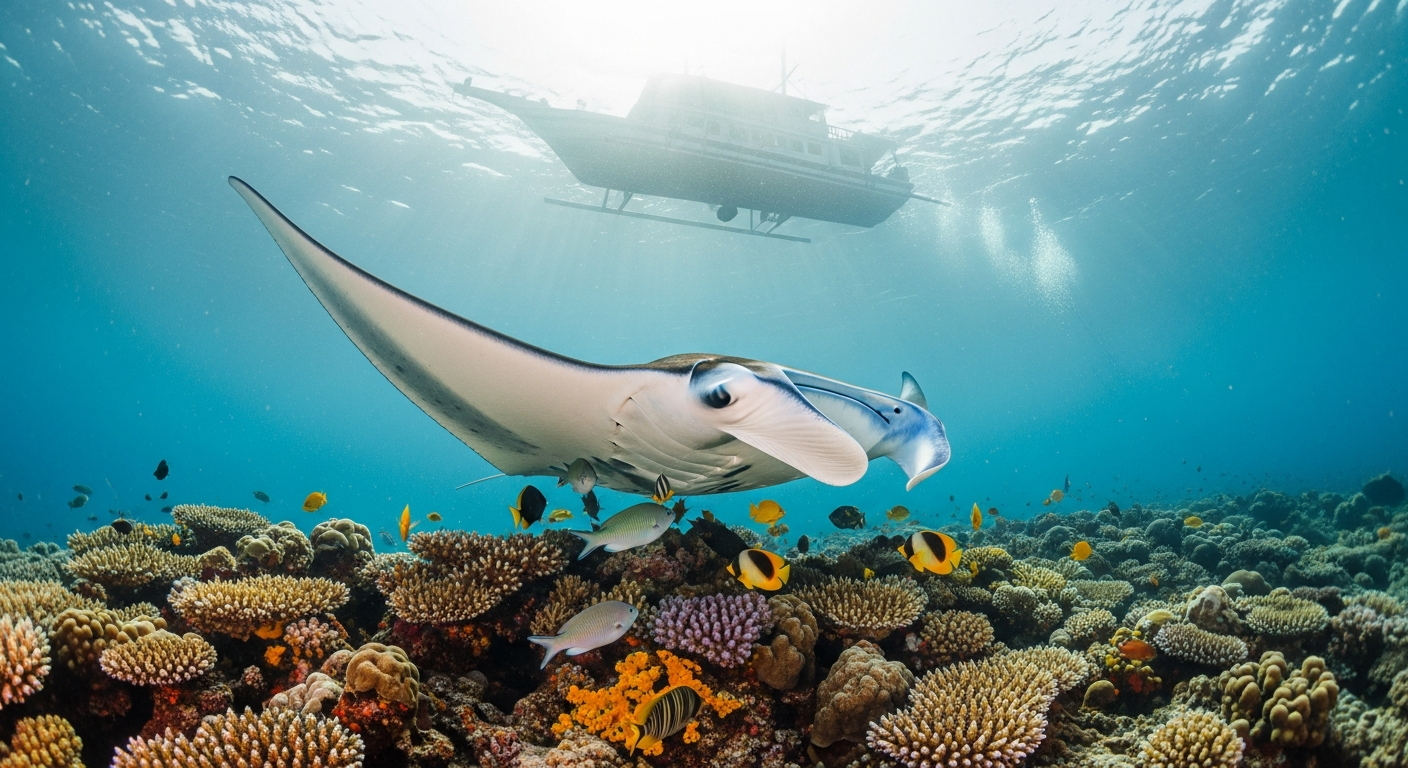
The water at Manta Sandy in January is a different substance from the water in July. Thirty metres of visibility against fifteen. Glassy sea against a swell that limits where a yacht can safely anchor. Same place, completely different trip.
We Will Tell You Which Months Disappoint
After ten years running charters across these 1,500 islands we know exactly when each experience peaks. What follows is the month-by-month breakdown with real conditions — not the sanitised “any time is great” line most operators give because they would like year-round bookings.
Twelve Months, Scored
The Month-by-Month Calendar
Score out of five reflects overall cruising conditions: visibility, sea state and wildlife activity combined.
January
Peak- Visibility
- 30 m+
- Sea
- Glassy seas
- Price
- Highest demand
Peak manta cleaning station activity. The photography holy grail.
February
Peak- Visibility
- 30 m+
- Sea
- Warmest water
- Price
- Highest demand
Manta peak continues and bioluminescence is at its strongest.
March
- Visibility
- 25–30 m
- Sea
- Occasional rain
- Price
- Excellent value
Manta season winding down, dark-sky events, noticeably quieter water.
April
- Visibility
- 20–25 m
- Sea
- Transition month
- Price
- End-season value
Season closing, the Lyrid meteor shower, last bookings of the window.
May
- Visibility
- 15–20 m
- Sea
- Shoulder, building swell
- Price
- Shoulder
Lower rates and fewer boats. Macro photography comes into its own.
June
- Visibility
- 15–20 m
- Sea
- Rougher seas
- Price
- Low
Limited availability. Some sites remain accessible for experienced divers.
July
- Visibility
- 15 m
- Sea
- Strongest currents
- Price
- Low
Green-tinged water from plankton blooms. Pelagic action for those who want it.
August
- Visibility
- 15–20 m
- Sea
- Still unsettled
- Price
- Low
Conditions begin easing late in the month. Experienced divers only.
September
- Visibility
- 20 m
- Sea
- Shoulder, settling
- Price
- Shoulder
Lower prices and fewer boats as the season turns back toward calm.
October
- Visibility
- 20–25 m
- Sea
- Season opening
- Price
- 10% below peak
Early manta activity, fewer boats, and value pricing before the rush.
November
Peak- Visibility
- 25–30 m
- Sea
- Calm, warm at 29°C
- Price
- High
Manta aggregation begins; whale sharks in Triton Bay.
December
Peak- Visibility
- 28–30 m
- Sea
- Peak calm
- Price
- Peak premium
Christmas and New Year charters, with full manta activity.
If You Only Read One Section
January and February. Full Stop.
Visibility exceeds thirty metres, the sea looks like glass most mornings, mantas aggregate at the Dampier Strait cleaning stations at predictable times, and the water sits at a comfortable 29°C.
If you are spending five thousand dollars a night on a vessel, you want January or February conditions. Everything else is a compromise — sometimes a very good one, but a compromise.

Match the Month to the Trip
Which Month Suits You
The best photographic conditions
January – February
Thirty metres of visibility and glassy mornings. Nothing else comes close.
Manta encounters above all
November – March
The aggregation window at the Dampier Strait cleaning stations.
Fewer boats and better value
October or March
Shoulder pricing with most of the peak-season conditions intact.
Whale sharks in Triton Bay
November onward
The bagan aggregation builds as the northern season opens.
Macro photography and quiet sites
May – September
Lower visibility, but far fewer vessels and excellent small-subject diving.
A festive charter
December
Peak calm and full manta activity — book nine to twelve months ahead.
How Far Ahead to Book
The most requested vessels sell out first regardless of month. We keep a waitlist for popular dates — ask even if your window shows as full.
8 – 12 months
December – January
4 – 6 months
Rest of peak, October – April
2 – 3 months
Shoulder, September and May
Timing Questions
Frequently Asked Questions
Is Raja Ampat worth visiting outside peak season?
For experienced divers who want quiet sites and macro subjects, yes. For a first visit, or if photography and calm water matter to you, wait for the window. We would rather move your dates than sell you a July charter you will compare unfavourably to the pictures.
Does it rain in peak season?
March sees occasional rain and December through February can bring short afternoon showers. None of it materially affects diving — visibility underwater is driven by current and plankton, not by rainfall.
When are mantas most reliable?
November through March at the Dampier Strait cleaning stations, peaking in January and February. Reef mantas appear year-round; the oceanic mantas at Blue Magic are the seasonal ones.
What about prices across the year?
October and March or April sit roughly ten to fifteen per cent below peak while keeping most of the conditions. December through February command the highest rates and the longest lead times.
Pick Your Window
Find the Month That Fits
Tell us what you most want to see and when you can travel. If those two do not line up, we will say so and suggest the nearest month that does.
Check AvailabilityContinue Exploring