
Apnea Paradise in the Coral Triangle
Luxury Freediving
Expedition
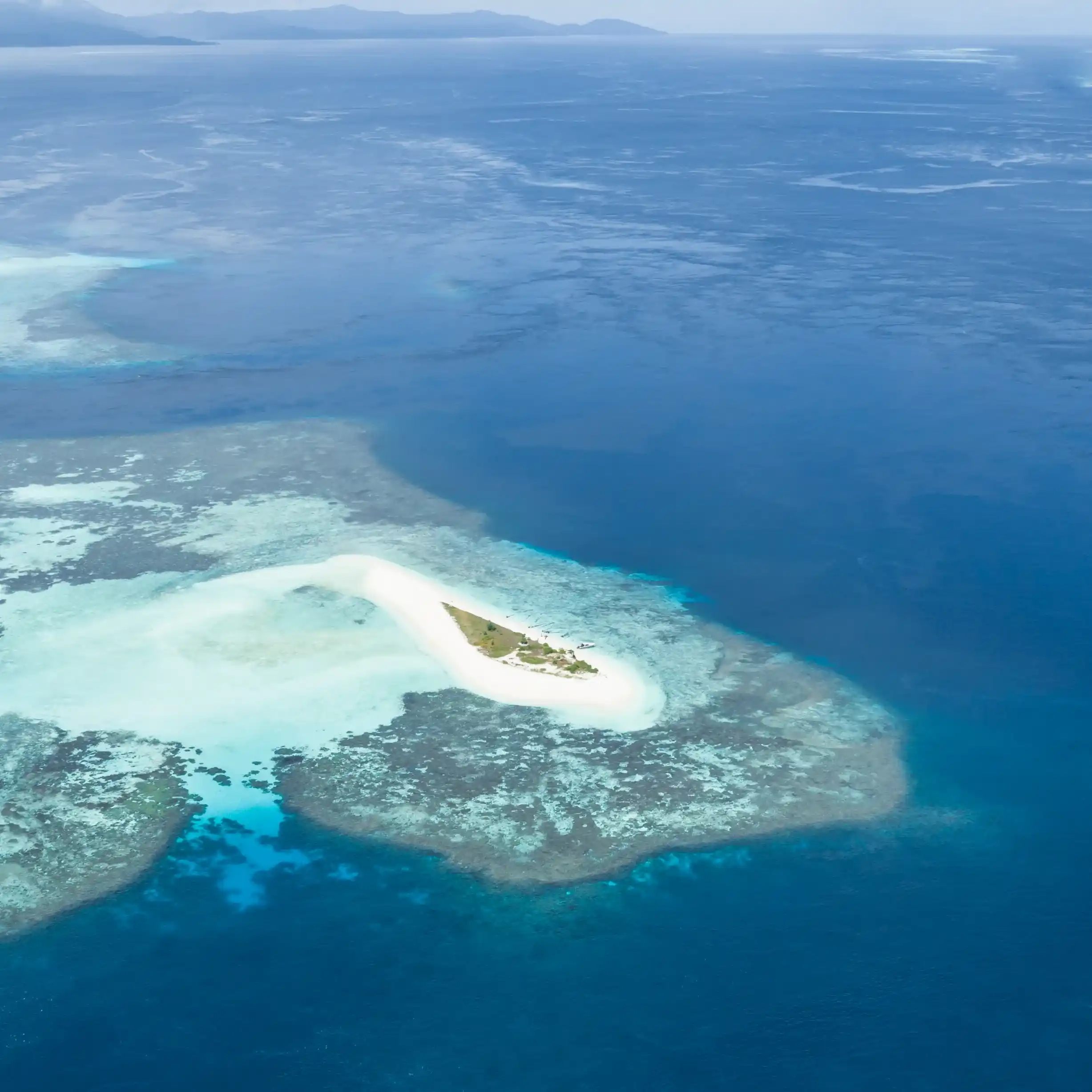
Quick answer: Raja Ampat is a natural freediving arena: warm water, calm dry-season seas and reef walls that begin just below the surface. Expeditions pair certified freedive guides with liveaboard comfort; basic certification or an intro course is recommended.
Freediving dissolves the barrier between human and ocean. No bubbles, no noise — approach marine life with genuine stealth. Raja Ampat's reefs at 5-10 meters make apnea accessible to beginners. Private charter expeditions from $3,500/person.
A Different Kind of Immersion
Why Freediving Works
Exceptionally in Raja Ampat
Raja Ampat's reef structure sits primarily at 8-15 meters — entirely within safe apnea ranges. A typical session visits 5-8 meters, permitting 2-3 minute bottom times without significant stress.
The sensory experience surpasses scuba markedly. Silence dominates. Marine life responds differently — fish approach closer, behaviour appears more natural, predators seem less alarmed. One photographer captured a pygmy seahorse interaction lasting eight minutes at 6 meters. The seahorse never fled.
The Trend
A competitor announced an 11-day Raja Ampat freediving expedition in January 2026. Within 48 hours, all spots filled. Within one week, a waitlist exceeding 50 people.
Freediving has transitioned from niche sport to mainstream luxury travel category. No certification prerequisite, beginner-accessible within 2-3 days of training.
Two Modalities
Freediving vs Scuba in Raja Ampat
Freediving
- - Complete silence — no bubbles
- - Closer wildlife interaction
- - Psychological immersion — meditative
- - No certification prerequisite
- - Superior photography results
- - Shorter bottom times (2-3 min)
Scuba Diving
- - Longer bottom times (45-70 min)
- - Deeper access (30m+)
- - Comfort-focused for extended exploration
- - Requires certification
- - Bubble noise alerts marine life
- - Tank management and safety stops
Mixed expeditions work well. Morning freediving sessions (5:30-8:30 AM), afternoon scuba dives (1:00-5:00 PM). Many guests develop strong preference for freediving by expedition conclusion.
Progressive Training
6-Day Expedition Structure
Pool Training
Apnea technique, breathing exercises, equalization methods, safety protocols
Confined Water Transitions
Shallow reef dives at 3-5 meters, effectively unlimited bottom time at this depth
Full Expedition Dives
Target reefs and advanced depths. 10+ meter comfort for most participants
Static breath-hold achieved
Horizontal dynamic distance
Comfortable depth by day 6
The Transformation
The psychological transition occurs on days 3-4, when breathing patterns relax and you stop fighting air scarcity. Novices describe first sessions as anxiety-inducing; by mid-expedition, they're requesting extended bottom times. Mental preparation matters as much as physical conditioning. We provide pre-expedition guided visualizations and meditation coaching via Zoom before arrival.
Conservative Protocols
Safety Protocols
Mandatory Practices
- Buddy system always enforced, max 3m separation
- Surface intervals minimum 5 minutes between dives
- Progressive depth — no extreme depths immediately
- Certified safety diver presence on all dives
- CPR training for all participants
Equipment & Response
- Safety lines and float systems
- Full first-aid capability onboard
- Rescue diver techniques training
- Emergency protocols for all participants
- 2026 expeditions: zero safety incidents
Primary concern: Shallow water blackout — unconsciousness from oxygen depletion during ascent. Mitigated through conservative dive planning, strict buddy protocols, and progressive depth exposure. Our safety record reflects rigorous adherence to established protocols.
Investment
Expedition Pricing — 2026
Group Expedition
6 days, 6-8 participants — vessel, meals, coaching, AIDA certification
$3,500–$5,200/person
Solo Expedition
8 days, dedicated guiding — personalized coaching and progression
$6,500–$7,200/person
Extended Expedition
8-10 days — advanced depth training, broader exploration
$4,800–$6,500/person
UW Photography Workshop
+$400
Advanced Depth Specialization
+$300
AIDA Certification
Included
Optimal Windows
Best Season for Freediving
Optimal (Jun-Oct)
- Calm seas, stable weather
- 25-30m visibility typical
- Primary expedition schedule
Viable (Nov-May)
- Increased boat motion possible
- 15-20m visibility typical
- Limited shoulder-season offerings
Depth Tip
Freediving depth capacity increases 10-15% between morning and afternoon sessions as your body acclimates. Sessions 1-2 will feel noticeably harder than 3-4. This is entirely normal — genuine physiological improvement occurring in real-time across your expedition week.
Freedivers Ask
Frequently Asked Questions
No. We welcome complete beginners. Our training curriculum assumes zero prior apnea experience. Most novice participants achieve proficiency within 2-3 expedition days. Prior scuba experience helps with water comfort but isn't required.
Real but manageable through conservative protocols. We enforce buddy systems (max 3m separation), maximum bottom times matched to training levels, progressive depth exposure, and sufficient surface intervals (minimum 5 minutes). Our zero-incident 2026 record reflects these commitments.
Yes, often specifically benefiting from the experience. Controlled water immersion in supportive environments frequently resolves water anxiety. We offer pre-trip counseling and adapted protocols. Tell your guide about anxiety — we'll personalize progressions.
Superior image quality and wildlife behaviour capture. Subjects approach closer to silent divers. Backscatter reduction improves clarity. Trade-off: shorter bottom times require efficient shooting. Experienced underwater photographers often prefer freediving platforms.
Moderately. Swimming to dive sites (50-200 metres) requires comfortable fitness. Repetitive breath-hold sessions across a day demand energy. Most reasonably-fit adults handle the demands. We recommend basic cardiovascular conditioning but don't require athlete-level fitness.
Diving's Most Intimate Frontier
Book Your 2026
Freediving Expedition
Limited to 8 participants per expedition. 2026 spots filling rapidly. Tell us your experience level and preferred dates.
Reserve Your SpotDiving & Snorkeling