

Dampier Strait · Oceanic Manta Seamount
Blue Magic
A seamount one kilometre south of Mios Kun, rising from 30 metres to 8, that delivers what no other site in Raja Ampat can: oceanic mantas. Not the three-metre reef mantas of Manta Sandy — animals reaching seven metres across.
8–30 m
Seamount peak to base
5–7 m
Oceanic manta wingspan
2–3 kt
Current at peak exchange
45–60 min
Typical dive
Honest Numbers, Not Brochure Numbers
What You Actually See, and How Often
Figures below are from our own dive logs across peak season, November to April. We would rather set the expectation correctly than have you surface disappointed.
Year-round, on the majority of dives
Five to ten on the north face, more on an incoming current
Schools of 200+, spiralling at the seamount edge
Peak season only, November to April
Tucked under overhangs below 25 metres
Occasional, passing through on migration
Two Manta Sites, Two Different Dives
Blue Magic or Manta Sandy?
Blue Magic
Manta species
Oceanic — 5–7 m wingspan
Topography
8–30 m seamount
Current
Moderate to strong drift
Other pelagics
Grey reef sharks, barracuda, tuna
Certification
Advanced recommended
Snorkel access
Limited — depth and current
Manta Sandy
Manta species
Reef — 3–4 m wingspan
Topography
12–18 m sandy bottom
Current
Mild to moderate
Other pelagics
Limited pelagic action
Certification
Open Water is fine
Snorkel access
Excellent
The encounter at Blue Magic is more intimate — fewer animals, but each dramatically larger and closer. Beginners and non-divers are better served at Manta Sandy, where conditions are calmer and the manta encounter is every bit as reliable.
Read the Seamount
Face by Face
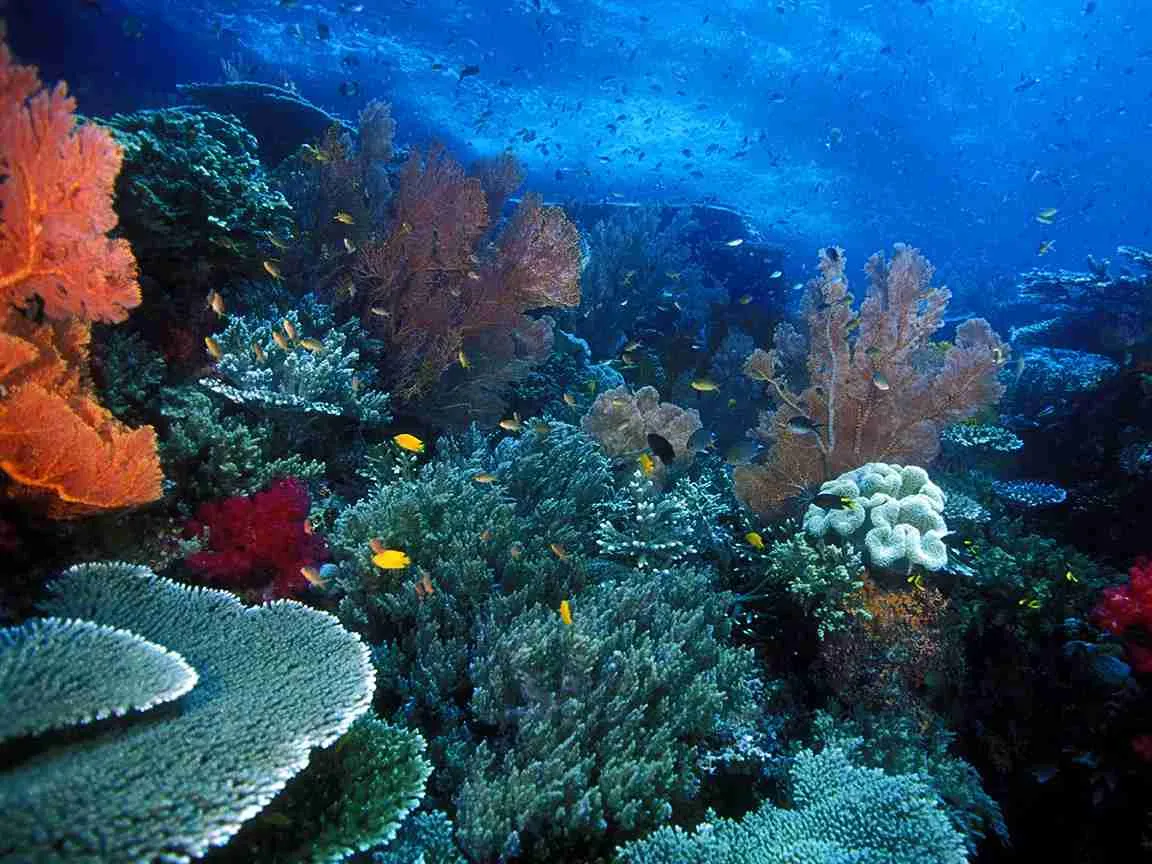
8 m
The peak
Carpeted in soft coral and sponges, under clouds of fusiliers and anthias. This is where the drift starts and where you finish your safety stop.
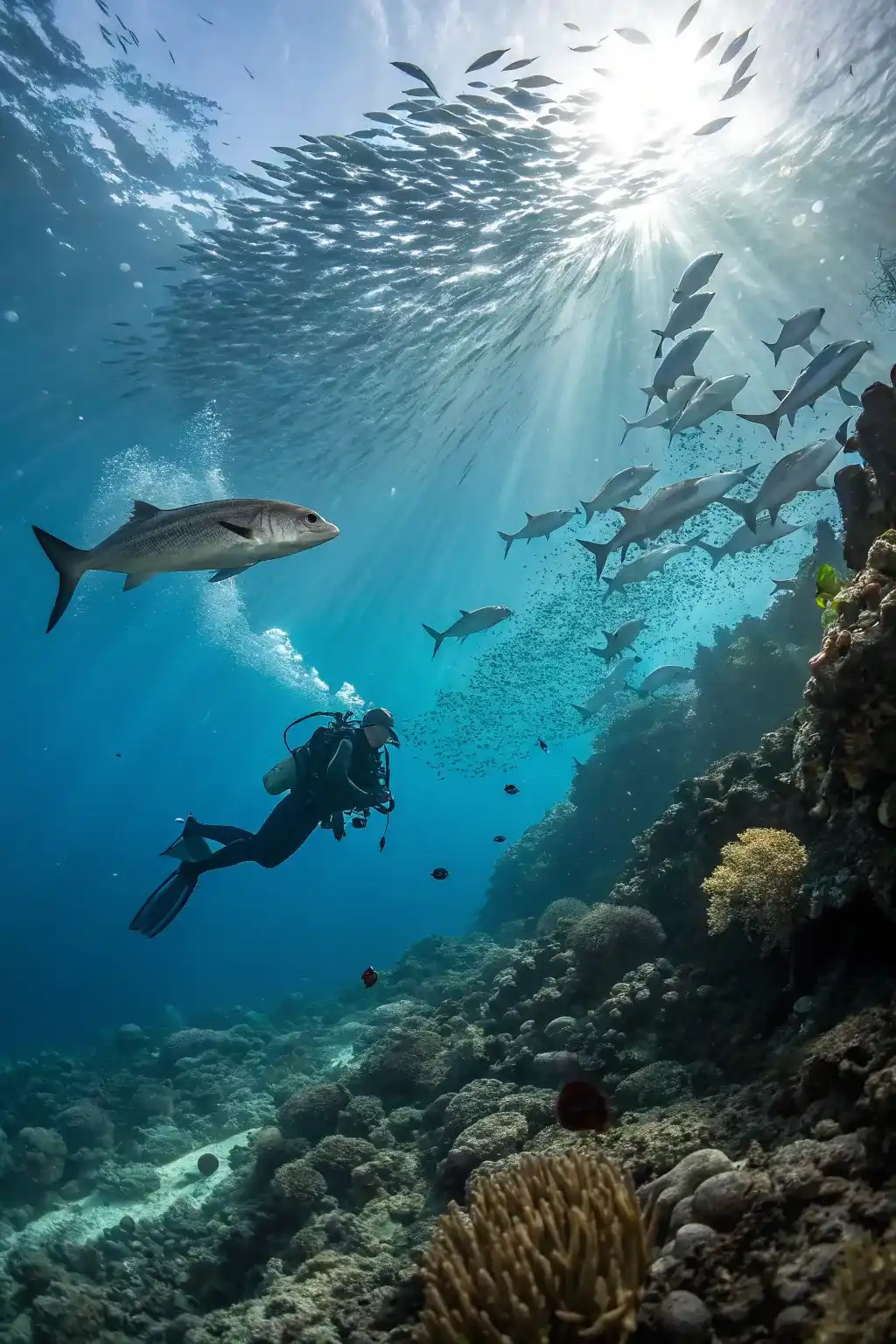
15–20 m
North face
Grey reef sharks patrol here — typically five to ten individuals, sometimes double that when the current is running in. Barracuda hold tight spirals at the edge, silver in the morning light.
12–15 m
South face — the cleaning station
Oceanic mantas arrive one at a time, hovering with wings extended while cleaner wrasse work over them. Position five minutes before the current phase turns and you will be there when they come.

25 m+
Below the shoulder
Wobbegong sharks tucked under overhangs, giant clams, and the occasional Napoleon wrasse working the deeper rubble.
The Site Is Current-Dependent
Time It to the Tide,
Not to the Clock
The best conditions come from an incoming current out of the south, pushing against the seamount and creating the upwelling that concentrates life on the north face. That upwelling is the whole mechanism: plankton draws the mantas, the mantas draw everything else.
Our captains monitor tidal data and position the vessel for dawn dives timed to peak current. Ask your guide to start on the south side and drift north — you meet the pelagics head-on, facing into the flow.
November – April
Warmest water at 29–30°C, visibility 25–35 metres, and peak oceanic manta activity. January and February are the standout months for big animals.
May – September
Cooler water and stronger current. Visibility drops to 15–20 metres, but experienced divers often prefer this window for the increase in pelagic action.
What You Need to Dive It
Advanced Open Water is strongly recommended. Current can run at two to three knots on a peak tidal exchange, which asks for comfortable drift technique rather than raw fitness.
Strong swimmers with thirty or more dives and an Open Water card can handle the mild-current days. Our guides assess conditions each morning and make the call — and they will say no when the answer is no.
Shooting Blue Magic
Go ultra-wide
A 10–17mm fisheye on a crop sensor, or 8–15mm on full frame. The topography and the pelagic action both reward the widest composition you own.
Shoot upward
Against the surface, when mantas or barracuda schools pass overhead. Silhouette beats detail here more often than not.
Bring your biggest light
The north face is shaded in early morning and oceanic mantas are dark-backed — without fill you lose all the detail on the animal.
Ask for the timing
Our guides can place you at the cleaning station five minutes before the mantas arrive. They know the pattern down to the current phase.
Divers Ask
Frequently Asked Questions
How often do oceanic mantas actually appear?
In peak season, November to April, on roughly 60 to 70 per cent of dives. Reef mantas show on more than 80 per cent year-round. We publish those numbers rather than promise a sighting.
Is Blue Magic good for snorkelling?
Only marginally. The seamount peak sits at eight metres with moderate current, so experienced snorkellers can watch some of the action from the surface on a calm day — but this is a diving site, and Manta Sandy is the better call for surface swimmers.
How long is a typical dive?
Forty-five to sixty minutes depending on your depth profile and air consumption. Because it is a drift, you are never swimming against the flow — you cover far more ground for the same effort.
How does it compare to Cape Kri?
Cape Kri is about sheer density of fish; Blue Magic is about size of animal. Most guests want both, and a seven-night charter comfortably covers each more than once.
Dawn Dives, Before the Other Boats
Dive Blue Magic
Send us your certification and month. We will tell you honestly what the manta odds look like for your window — including when another month would serve you better.
Plan Your CharterContinue Exploring