
TripAdvisor 4× Winner (sister brand) 800+ Voyages Since 2015 45+ Countries Served Forbes Council CEO 24-Hour Quote Response
Raja Ampat Bird of Paradise 2026 — Luxury Birdwatching Tour Guide

Luxury Birdwatching Excursion

Bird of Paradise
Field Guide

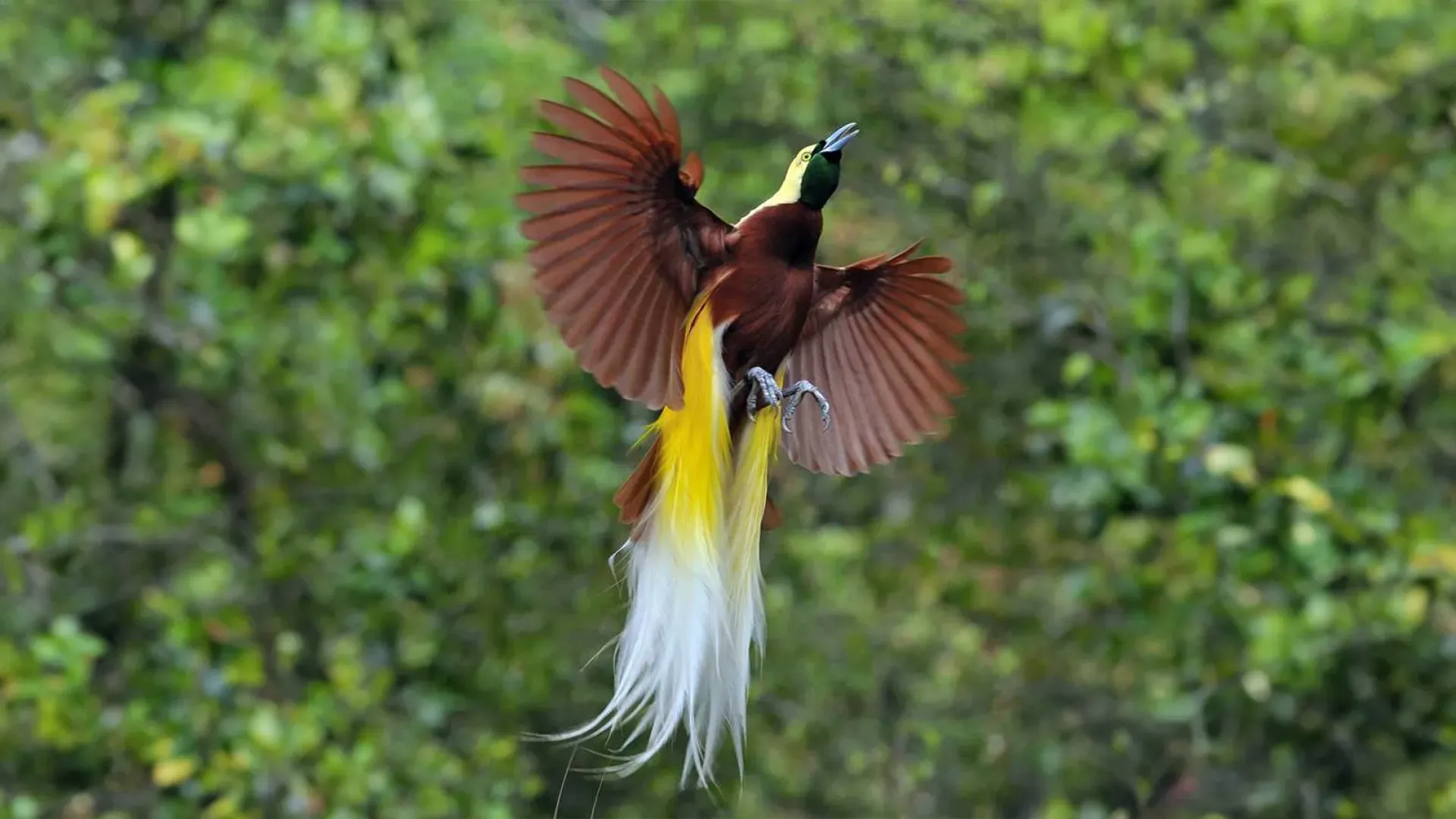
You came for the ocean. Above the waterline the forests of Waigeo and Batanta shelter species that exist nowhere else on the planet — wild birds performing natural behaviour in primary rainforest, visible only to those who know where to look and when to arrive.

Four Species, Ranked by Rarity

What You Can Realistically See

Wilson’s Bird of Paradise

Cicinnurus respublica

Where

Waigeo and Batanta only

Display

05:30 – 06:30

Rarity

Two islands worldwide

A turquoise crown of bare skin, red back, yellow cape and two curled violet tail wires. The male clears debris from his dance floor the evening before, then displays on the forest floor. You sit eight to ten metres away in silence.

Red Bird of Paradise

Paradisaea rubra

Where

Waigeo, Kri area accessible

Display

05:30 – 07:00

Rarity

Endemic to Raja Ampat and neighbours

Cascading crimson tail streamers and an elaborate canopy display. Higher in the trees than Wilson’s, so binoculars genuinely help here even though they are unnecessary on the forest floor.

Twelve-wired Bird of Paradise

Seleucidis melanoleucus

Where

Batanta

Display

06:00 – 07:30

Rarity

Specialised guide required

Displays from a bare vertical trunk, brushing the wire-like flank feathers against visiting females. Reaching it needs both the right anchorage and a guide who tracks this species specifically.

King Bird of Paradise

Cicinnurus regius

Where

Waigeo lowland forest

Display

Dawn

Rarity

Uncommon but locatable

The smallest of the group and often heard before it is seen. Scarlet above, white below, with two wire tails ending in emerald spirals.

Half-Day Excursion

The Morning, Minute by Minute

The walk is fifteen to thirty minutes through lowland rainforest — muddy in places, moderately steep in others. Silence is the whole discipline: one cough and the bird is gone for half an hour.

04:30 Wake-up call aboard. Hot coffee and a light breakfast on deck.
05:00 Board the tender for a twenty to forty minute run to the forest landing.
05:25 Enter the forest with the local guide, headlamps on the trail.
05:45 Arrive at the display area. Cushioned seating is already in place.
06:00 The display begins — cape fanned, spiralling dance on the cleared floor.
07:00 Walk out and return to the vessel for a full breakfast.
08:30 Back in the water, diving.

You Do Not Need to Be a Birdwatcher

Most of our birding guests have no birding experience at all. They are divers, photographers and travellers who want to see something extraordinary — and the birds oblige.

When a male fans his iridescent crown and begins spiralling on the forest floor two metres in front of you, the reaction is universal: jaw drops, camera forgets to shoot. You do not need a life list. You need to be quiet and awake before dawn.

You Do Not Need to Be a Birdwatcher

Photography and Kit

Lens 300mm minimum; 400–600mm preferred for canopy species
ISO Expect 3200–6400 — the forest floor is dark at first light
Flash Not permitted. It ends the display and we will ask you to stop
Support Monopod rather than tripod; you are seated in tight cover
Optics Binoculars available on request, useful for the canopy species
Clothing Dark and non-rustling; closed-toe shoes for the trail

Before Dawn

Frequently Asked Questions

How is this different from the cruise package?

This is the excursion itself — a half day that can be added to any charter. The cruise page describes the full itinerary that builds a voyage around it.

Can I see more than one species in a morning?

Occasionally, if the anchorage suits both a forest-floor and a canopy species. Usually you commit to one display site and see it properly rather than rushing between two.

How close do you get?

Eight to ten metres for Wilson’s on the forest floor. The canopy species are further and higher, which is where binoculars earn their place.

What if the bird does not appear?

It happens, and we say so plainly. Our village contacts confirm the active display tree two days out, which is why it is uncommon — but these are wild animals and no operator can guarantee them.

Add to Any Charter

Book the Birdwatching Morning

Tell us your dates and which species matters most. We will tell you which anchorage puts you closest and whether that display tree is currently active.

Request the Excursion