
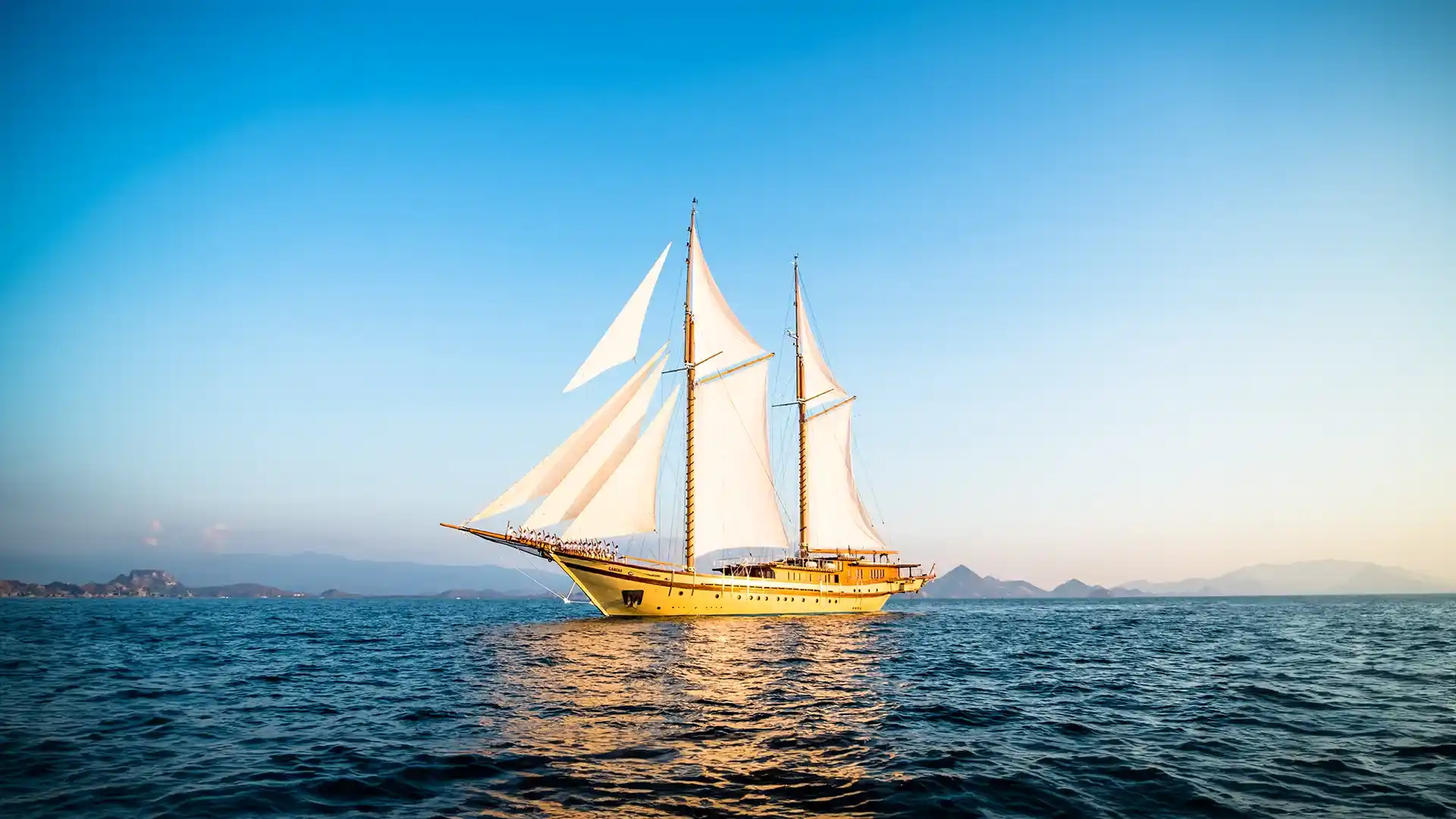
14 Nights · Expedition Class
Raja Ampat to the
Spice Islands
There are yacht charters, and then there are expeditions. Fourteen nights crossing from the marine biodiversity capital of the world to the islands where European powers fought wars over nutmeg.
14
Nights
400
Years of trade history
From $15,000
Per charter
2
Seas crossed
The Same Water, Four Centuries Apart
Then and Now
The prize
Then — the 1600s
Nutmeg grew on these islands and nowhere else on Earth, and traded at the price of gold in European markets.
Now — your voyage
The same trees still stand in the plantations above Bandaneira. You walk beneath them with a guide who grew up harvesting them.
The fortifications
Then — the 1600s
Dutch and Portuguese traders built fortified posts to control the trade, and fought each other for the monopoly.
Now — your voyage
Fort Belgica still overlooks the harbour, four hundred years on. You climb its bastions in the early morning before the heat.
The crossing
Then — the 1600s
Sailing ships took weeks, navigating one of the deepest bodies of water in the archipelago with charts that were mostly guesswork.
Now — your voyage
Two nights under power in a stabilised hull, with the crossing timed to a weather window your captain has been watching for a week.
What was below
Then — the 1600s
Entirely unknown. The reefs were hazards to be avoided, not destinations.
Now — your voyage
Koon Island’s wall drops from five metres to three hundred, covered in sea fans, with trevally schooling in their hundreds of thousands.
Leg by Leg
The Route

Days 1–4
Southern Raja Ampat — Misool
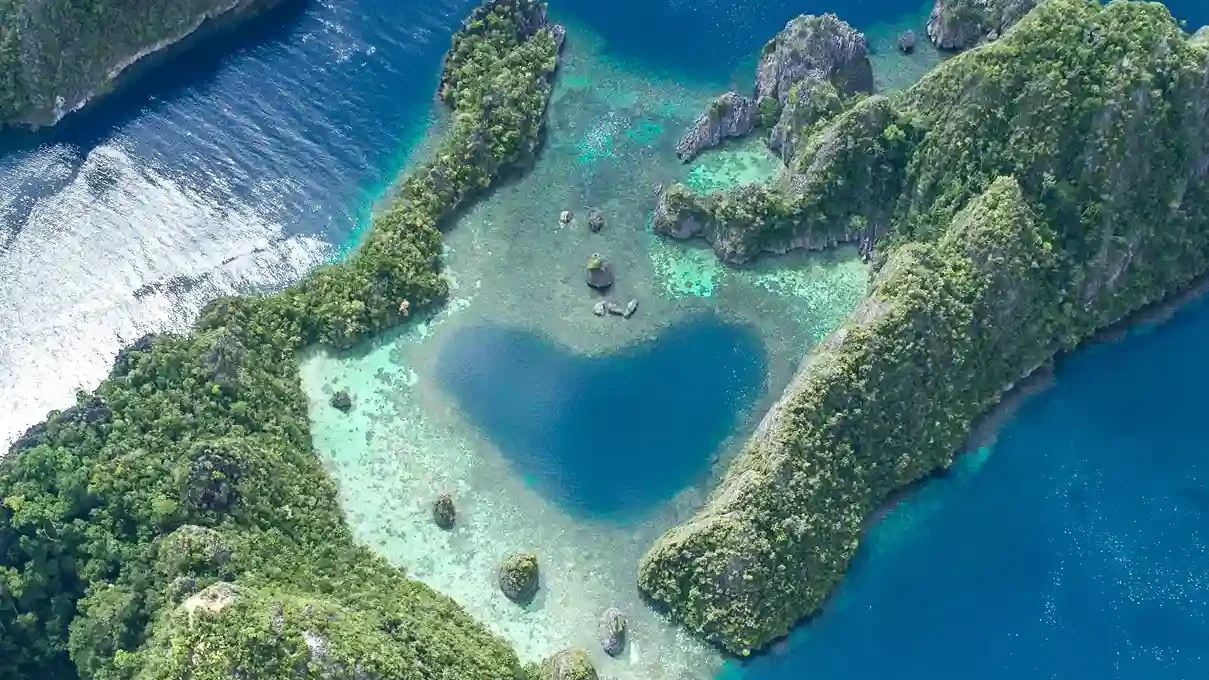
The soft coral gardens of the Misool reserve: Boo Windows, Fiabacet, Magic Mountain. Anchoring off uninhabited islands with powder-white beaches. This is the marine peak of the voyage, and it comes first.

Days 5–7
Banda Sea crossing
South across one of the deepest bodies of water in Indonesia. Open-ocean crossings bring pilot whales, dolphin pods and the occasional hammerhead. Koon Island’s wall dive breaks the passage.
Days 8–11
The Banda Islands
Bandaneira, the tiny colonial capital. Fort Belgica above the harbour, nutmeg plantations on the slopes, and the volcanic underwater landscape of Gunung Api — an active volcano whose lava flows are now colonised by healthy hard coral.

Days 12–14
Return passage
Additional dive stops at sites our captains have charted over decades on this route — unnamed reefs and uninhabited islands that appear on no published itinerary.
Why This Route Needs a Different Boat
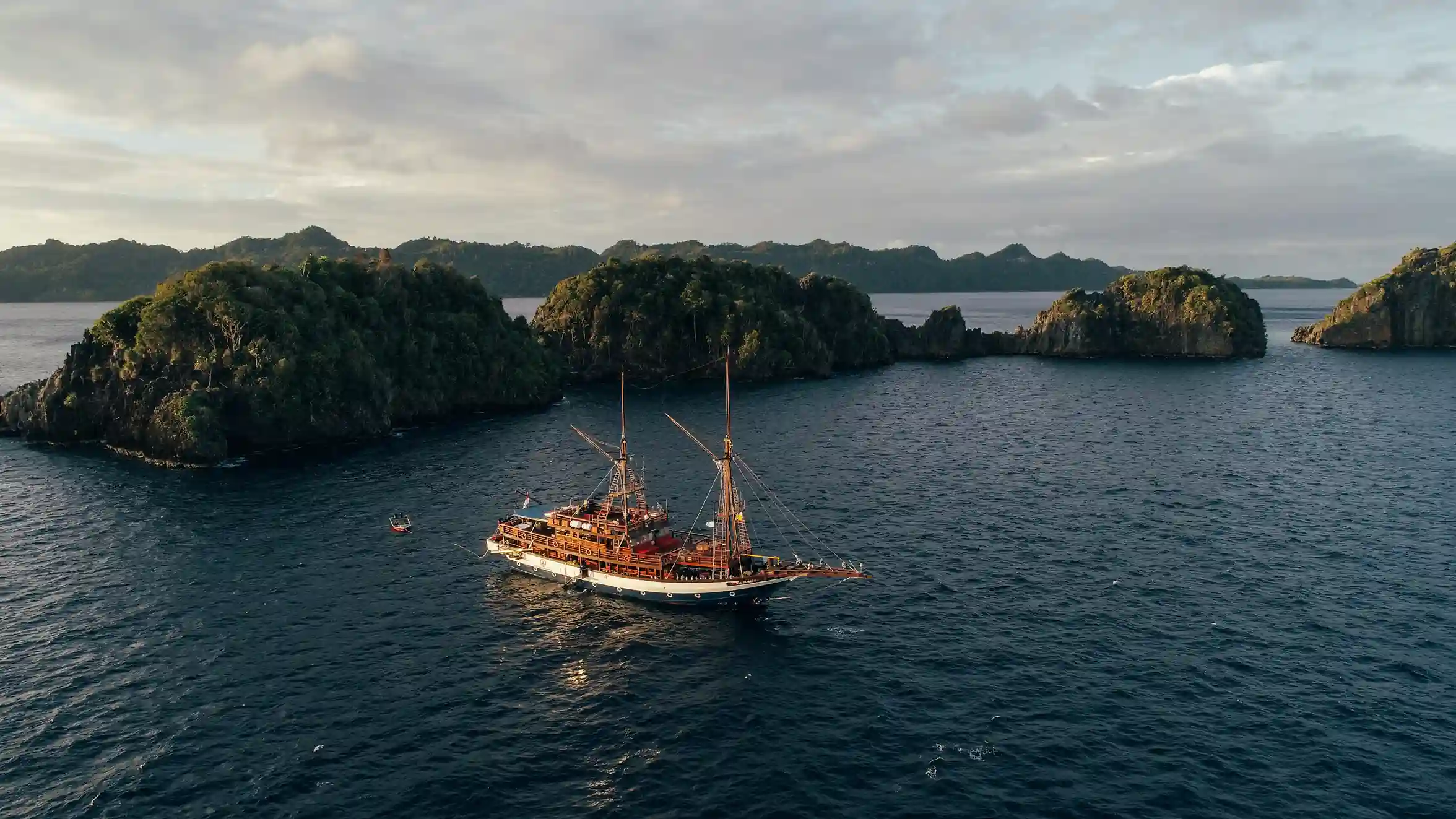
We run this route on expedition-class vessels only: large phinisi with extended fuel range, stabilised hulls for the open-water legs, full compressor systems, and crews experienced in multi-week offshore navigation.
The Banda Sea crossing asks for navigational judgement, weather-window discipline and contingency planning. It is not a route for an operator taking it on for the first time, and we would say the same about any competitor attempting it.
Before You Commit
Frequently Asked Questions
How rough is the Banda Sea crossing?
Two nights in open water, and it will be felt. Stabilised hulls make it manageable rather than pleasant. Request a midship cabin, and take a motion-sickness patch rather than tablets — that is the single most common piece of feedback we get.
Do I need to dive to enjoy this route?
No, though divers get more from the middle legs. The Banda Islands are as much a historical destination as a marine one — the forts, the plantations and the town itself justify the days on their own.
When does this route run?
The crossing windows are seasonal and narrow. We plan them around settled weather rather than around demand, so dates are limited and set well in advance.
Can the route be run in reverse?
Yes. Starting from Banda and finishing in Raja Ampat works equally well and sometimes suits the weather better. Your captain will tell you which direction the season favours.
Limited Seasonal Windows
Enquire About the Crossing
Tell us your window and we will tell you which crossing dates the weather actually supports — and which direction to run it.
Request the ExpeditionContinue Exploring