
Home / Raja Ampat Bird of Paradise 2026 — Luxury Birdwatching Tour Guide
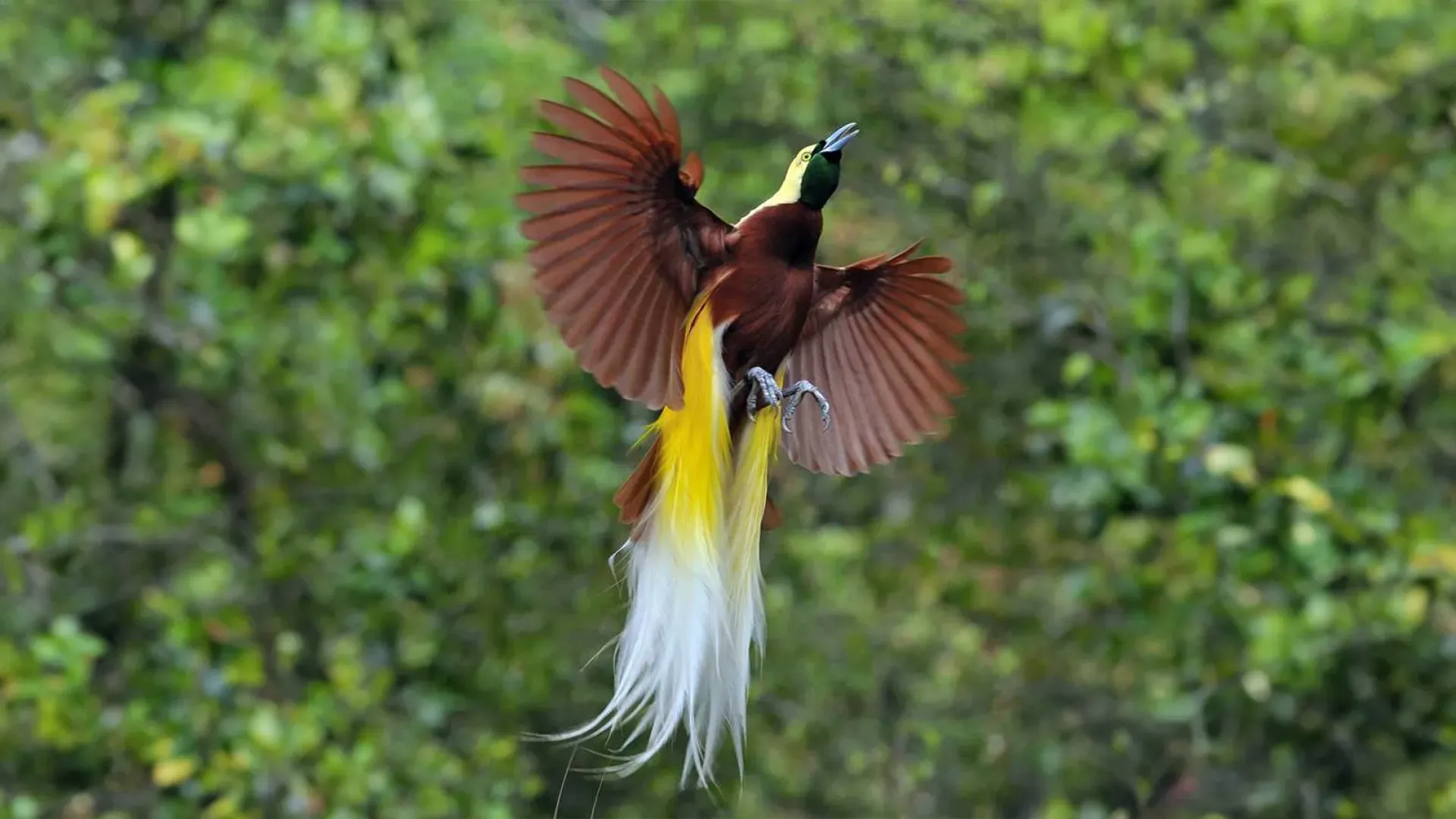
Raja Ampat is home to two endemic birds of paradise found nowhere else: Wilson’s Bird of Paradise (Waigeo and Batanta islands only — the most colorful bird on Earth) and the Red Bird of Paradise (Waigeo). Luxury liveaboard guests access birdwatching sites via private speedboat at 5 AM with a dedicated local guide, arriving at display trees before dawn when males perform their courtship dances. No crowds, no group tours — a private wilderness encounter.

Raja Ampat Bird of Paradise — Luxury Birdwatching Tour 2026

You came for the ocean. But Raja Ampat holds something above the waterline that is equally rare, equally spectacular, and seen by far fewer visitors: birds of paradise. The forests of Waigeo and Batanta islands shelter species that exist nowhere else on the planet. Wilson’s Bird of Paradise — a bird so absurdly colorful it looks like it was designed by committee, with a turquoise crown, red back, yellow cape, and curled violet tail feathers — is restricted to just two islands on Earth, both within Raja Ampat. The Red Bird of Paradise, with its cascading crimson tail streamers and elaborate courtship display, perches in the canopy of Waigeo’s lowland forest. These are not zoo specimens. These are wild birds performing natural behavior in primary rainforest, visible only to those who know where to look and when to arrive.

Our birdwatching program has been running for six years, developed in partnership with local Papuan guides from Waigeo who have tracked bird of paradise display trees for decades. The guides know individual birds, their preferred branches, their display schedules (typically 5:30-7:00 AM), and the approach routes that avoid disturbing them. We offer this as an add-on to any luxury charter — a half-day excursion that leaves the vessel before dawn, enters the forest while it’s still dark, and positions you at the display tree as the first light filters through the canopy.

Wilson’s Bird of Paradise displays between 5:30-6:30 AM in a cleared area on the forest floor — the male actually clears debris from his “dance floor” the evening before. You’ll sit quietly at 8-10 meters distance. The guide uses a small flashlight to help you navigate the forest path, then switches off. As dawn breaks, the male begins his display. Silence is essential — one cough and the bird vanishes for 30 minutes.

Which Birds of Paradise Can You See in Raja Ampat?

Species Location Best Time Rarity
Wilson’s Bird of Paradise Waigeo, Batanta 5:30-6:30 AM Extremely rare — 2 islands only worldwide
Red Bird of Paradise Waigeo (Kri area accessible) 5:30-7:00 AM Rare — endemic to Raja Ampat & nearby islands
Twelve-wired Bird of Paradise Batanta 6:00-7:30 AM Very rare — specialized guide needed
King Bird of Paradise Waigeo lowland forest Dawn Uncommon but locatable

What Does the Birdwatching Excursion Look Like?

4:30 AM: wake-up call on vessel. Hot coffee and light breakfast. 5:00 AM: board the tender/speedboat for a 20-40 minute ride to the forest landing point (varies by anchor position). 5:20-5:30 AM: enter the forest with local guide, using headlamps on the trail. The walk is 15-30 minutes through lowland rainforest — muddy in places, moderately steep. 5:45 AM: arrive at the display area. Sit quietly on prepared seating (our guides place cushions). 6:00-6:30 AM: the display begins. Wilson’s clears his dance floor, fans his cape, dances in circles. Red BOP extends tail streamers and calls from the canopy. 7:00 AM: descend, return to vessel for full breakfast. You’re back in the water diving by 8:30 AM.

Do I Need to Be a Birdwatcher to Enjoy This?

Not at all. In fact, most of our birdwatching guests have zero birding experience. They are luxury travelers, divers, and photographers who simply want to see something extraordinary. The birds of paradise deliver. When a Wilson’s male fans his iridescent turquoise crown and begins his spiraling dance on the forest floor, six feet in front of you, the reaction is universal — jaw drops, camera forgets to shoot, eyes widen. You don’t need a life list or binoculars (although we provide Swarovski optics on request). You just need to be quiet and awake before dawn.

What Photography Equipment Should I Bring?

A 200-400mm zoom lens is ideal for the display tree. The light is low (pre-dawn forest), so a fast lens (f/2.8-f/4) and a camera body with strong high-ISO performance (6400+) are important. Monopod preferred over tripod (limited space at viewing position). Our guides can arrange a photography-specific session with extended observation time for serious shooters — we’ve hosted National Geographic contributors who spent 3 hours at a single display tree.

Frequently Asked Questions

How likely am I to see a bird of paradise?

Red Bird of Paradise: 90%+ sighting rate year-round (morning excursion). Wilson’s: 70-80% — more weather-dependent and requires specific conditions.

Is the forest trek difficult?

Moderate. 15-30 minutes through rainforest, some steep and muddy sections. Wear closed shoes with grip. Not suitable for those with significant mobility limitations.

Can children join the birdwatching?

Children 10+ who can stay quiet for 30-60 minutes. Younger children tend to be too restless for wildlife observation. An alternative cultural village visit can be arranged.

Is there an additional cost?

A local guide fee of $50-100 per group applies, paid directly to the Papuan guide community. This funds forest conservation and provides income independent of fishing.

When is the best season?

Year-round. Birds of paradise display daily regardless of season. Drier months (Oct-Mar) offer easier forest access.

See the world’s most spectacular birds — only in Raja Ampat.

Add Bird of Paradise to Your Luxury Journey


WhatsApp Luxury Raja Ampat