
Home / Destinations / Triton Bay
Triton Bay Whale Sharks — Raja Ampat Luxury Expedition 2026
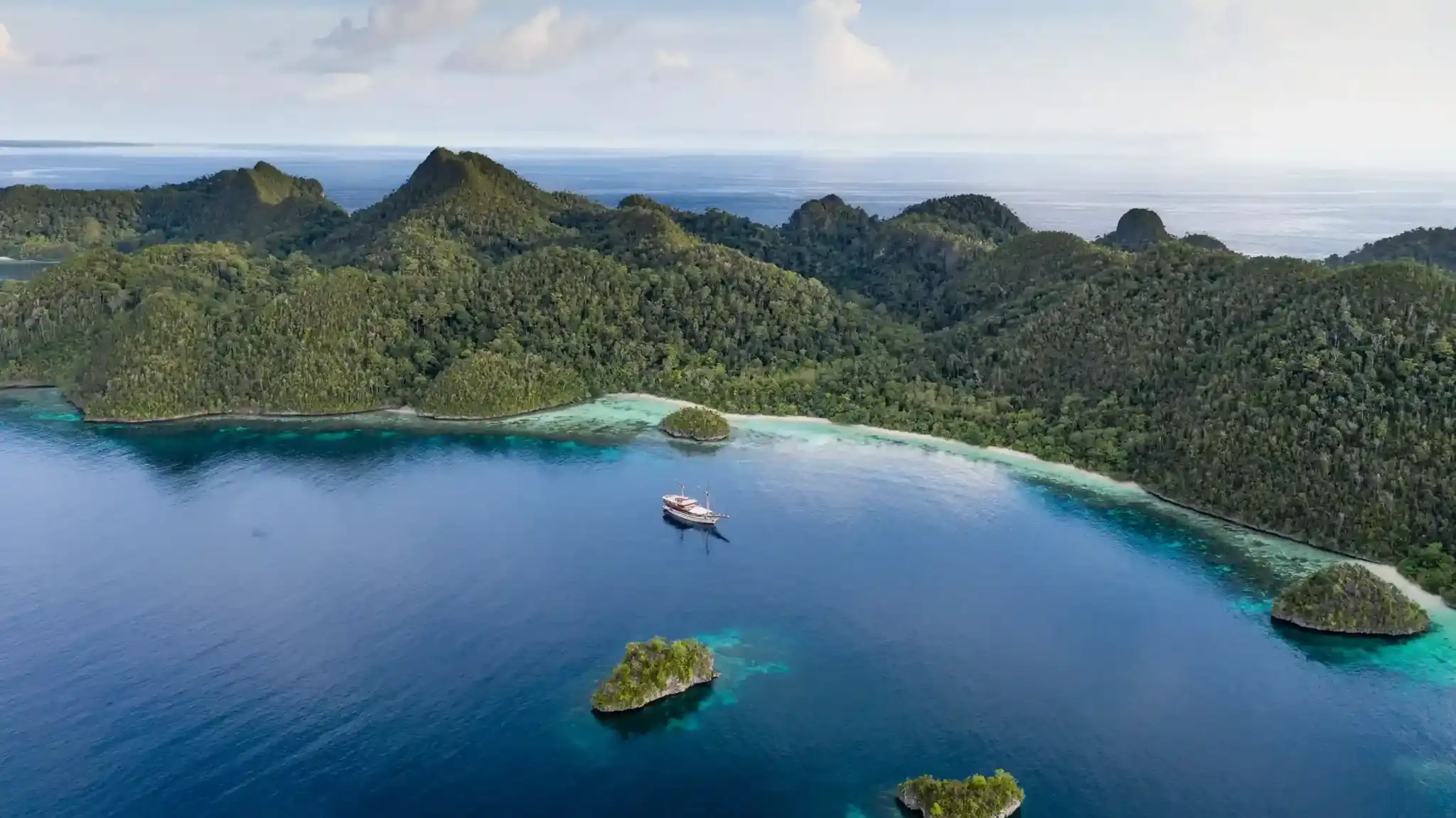
Triton Bay is the gateway to Raja Ampat’s most exclusive encounter: swimming with whale sharks. Located southeast of Raja Ampat proper, Triton Bay hosts a reliable aggregation of juvenile whale sharks (4-8 meters) that feed alongside traditional fishing platforms.
Triton Bay Whale Sharks — Raja Ampat Luxury Expedition 2026
There is a moment in Triton Bay that no amount of diving experience can prepare you for. A shape materializes from the green murk: a spotted head the width of a car, a mouth that could swallow a washing machine. The whale shark rises to the surface, mouth open, filtering baitfish.
Triton Bay sits 300 kilometers southeast of Sorong. This distance is why encounters here remain intimate. Triton Bay hosts perhaps 10-15 snorkelers per day at the bagan sites. The experience is uncrowded and utterly unforgettable.
Insider Tip
The whale sharks at Triton Bay are juveniles — 4-8 meters — which means they’re more curious and interactive than adults. February and March offer the highest density. Book an 11-14 night charter to combine Triton Bay with North Raja Ampat.
When Is the Best Season for Whale Sharks at Triton Bay?
| Month | Whale Shark Likelihood | Conditions |
|---|---|---|
| November-January | Good (60-70%) | Calm seas, moderate visibility |
| February-April | Excellent (85-95%) | Peak aggregation, warm water |
| May-July | Moderate (40-50%) | Fewer sharks, cooler water |
| August-October | Low (20-30%) | Off-season, rougher seas |
What Else Will You See at Triton Bay?
The diving at Triton Bay is extraordinary independent of whale sharks. Soft coral walls rivaling Misool. Wobbegong sharks under every overhang. Schools of batfish and barracuda. Blackwater night dives are considered among the best in the world. Triton Bay sees fewer than 200 divers per year.
How Do You Combine Triton Bay with Raja Ampat?
The classic luxury expedition route: depart Sorong, sail to Triton Bay, then north through Banda Sea to Raja Ampat. This 14-day route is available on Jakare, Celestia, and Dunia Baru. Total charter cost: $5,500-$20,000/night.
Do I Need to Dive to See Whale Sharks?
No. Whale shark encounters at Triton Bay are snorkel-based. The sharks feed at the surface (0-5 meters) near the bagan platforms. No dive certification required. Average encounter time: 30-60 minutes per session.
Quick Answers
Frequently Asked Questions
During peak season (Feb-Apr), 2-6 individual whale sharks per bagan visit. Record sightings include 8+ sharks at a single bagan.
No. Whale sharks are filter feeders. No teeth, no aggression toward humans. Maintain 3-meter distance from the tail.
20-24 hours by luxury liveaboard. Usually sailed overnight.
Children 8+ who are confident swimmers can participate with a dedicated guide.
11 nights minimum recommended to include Triton Bay + Raja Ampat.
Ready for the Ultimate Whale Shark Expedition?
Swim with the largest fish on Earth in one of the most remote waters.
Join the Whale Shark + Raja Ampat Luxury ExpeditionExplore More
Explore More Luxury Raja Ampat Experiences
Continue exploring: luxury diving · diving cruise · triton bay expedition · destinations
Ready to plan? book your voyage