
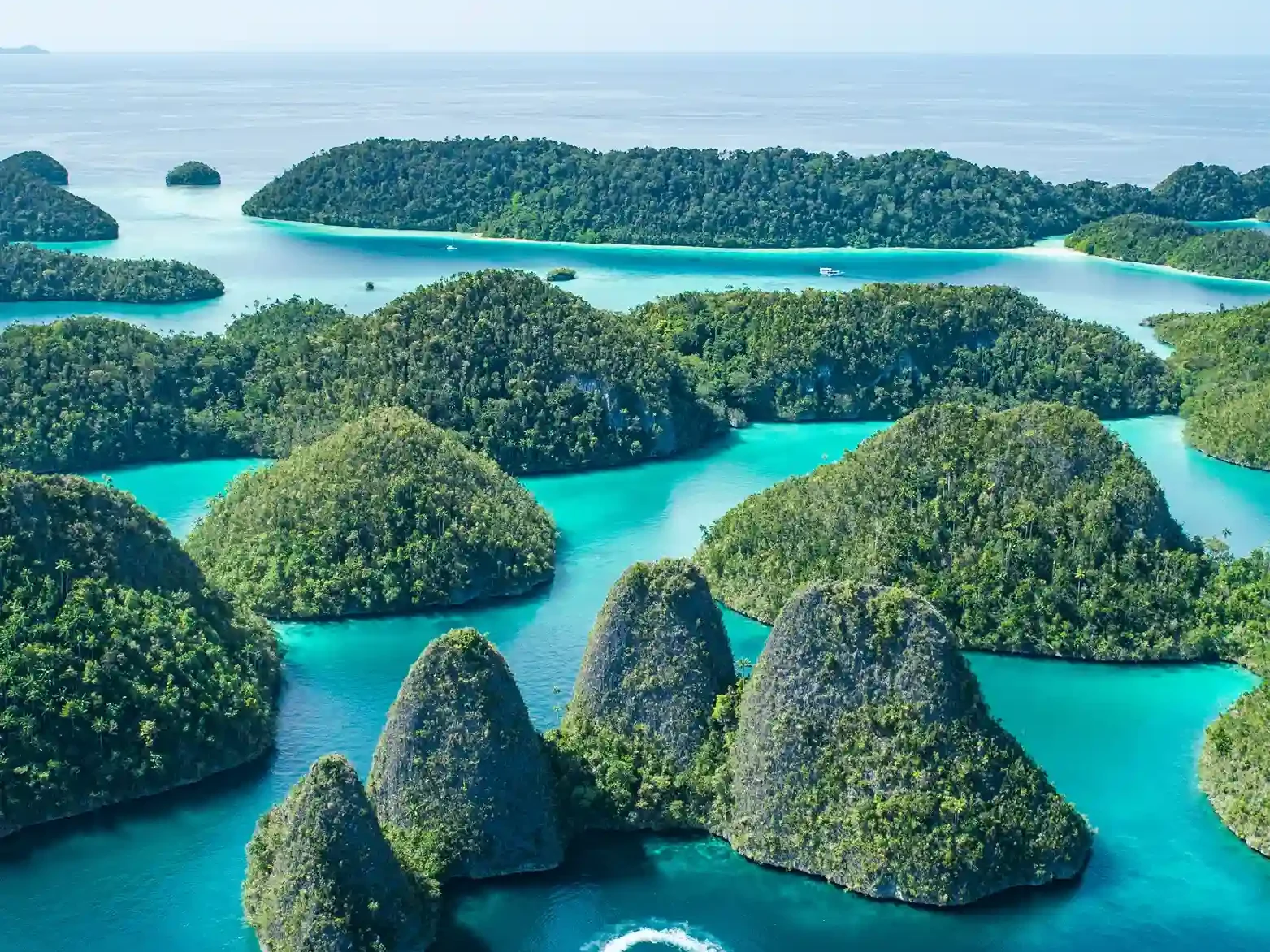
Two Whale Shark Destinations, One Voyage
Raja Ampat &
Cenderawasih Bay
Year-round whale sharks at Kwatisore bagan + Raja Ampat's manta rays and coral gardens. 11-13 days from Sorong. From $9,800/person. Only Juara Holding Group operates this route.
Sorong → Cenderawasih → RA
From / person
Whale shark encounter
Optimal window
Why Choose?
The Crossing No Other
Operator Dared Combine
Most luxury travelers pick one: either Raja Ampat's mantas or Cenderawasih's whale sharks. We asked why choose?
The logistics kept competitors out — local expertise, diplomatic relationships with fisher communities, fleet positioning, and predictable whale shark data spanning years. Our captain has guided 240+ successful encounters across West Papua.
The first crossing launched in 2025. It sold out in forty-seven days.
Cenderawasih vs Triton Bay
Cenderawasih (Kwatisore)
Year-round whale sharks at bagan fishing platforms. 1-5m depth. Sept-May. Surface snorkeling with 12m individuals.
Triton Bay
Seasonal plankton-driven. Peak May-Aug. Different whale shark population and ecosystem entirely.
Two Ecosystems
The Crossing Structure
Cenderawasih (3 Days)
Whale shark snorkeling at Kwatisore bagan. 1-5m depth. Village visits. Marine biology talks. Sunrise snorkels from fishing boats.
Sept-May (year-round visits)
Transit (1 Day)
6-8 hours open water. Dolphins, seabirds. Relax aboard, process whale shark memories. Evening arrival near Sorong.
Raja Ampat (8-9 Days)
Manta diving, reef exploration, critter hunting. German Channel, Sawandarek, Arborek. 5-35m depth. Full Coral Triangle immersion.
Oct-April (manta season)
Before Sunrise
The Whale Shark Experience
Whale sharks appear as shadows. Then outlines. Then presence. The largest is twelve metres. It moves with deliberate slowness, mouth open, filtering. You slip into the water ten metres away. The creature continues its path, indifferent. For ten minutes, you hang at the surface, breathing, watching a living fossil.
Avg sightings / 3 days
2025 record (2 days)
Captain's encounters
Insider
Ask your captain about sunrise snorkeling from the fishing boat itself rather than the yacht tender. Lower, warmer water and the fishermen's own whale shark-reading skills. Guests say it changes the intimacy factor entirely.
A Different Ocean
From Whale Sharks to Mantas
The visual transition is jarring in the best way. Cenderawasih is open water and surface interaction. Raja Ampat is vertical walls, current channels, and the living complexity of the Coral Triangle.
You drop to fifteen metres at German Channel, and a manta glides past your mask like a living kite. 1,400 coral species and 1,300 reef fish species. Eight days allocated — hitting primary manta zones and lesser-known macro sites where rhinopia, hairy frogfish, and nudibranchs reward patient photographers.
Honest Math
Crossing vs Separate Bookings
Booked Separately
- 7-day RA charter: $9,100-14,500
- 4-day Cenderawasih: $2,100-3,800
- Total: $11,200-18,300
- Time: 3 weeks of travel
Our Crossing
- 11 days, both destinations: $9,800-13,200
- Time: 11-13 days total
- Save money + time
- Narrative arc of two ecosystems
The trade-off: Less time in each zone than single-destination charters. For maximum RA bottom time, book a dedicated charter. For breadth and whale sharks, this crossing delivers.
Day by Day
Sample 12-Day Itinerary
Arrive Sorong, transfer, embark
Evening briefing and safety drills
Cenderawasih Bay — Kwatisore Whale Sharks
3 snorkel sessions, village visits, marine biology talks
Transit to Sorong area
6-8 hours. Dolphins, seabirds. Relax aboard
German Channel — Manta Diving
Primary manta zone, reef exploration
Sawandarek Strait
Wall diving, macro sites, current dives
Arborek & Macro Reefs
Rhinopia, frogfish, nudibranchs, village visit
Final morning snorkel, disembark
Transfer to Sorong airport
Splitting the Difference
Why October-April Matters
October catches tail-end dry season manta activity while Cenderawasih whale sharks remain reliable. By December, wet season increases whale shark frequency. November-March is when our fleet is positioned optimally across both regions.
Crossing Questions
Frequently Asked Questions
No. Whale sharks are filter feeders with a throat the size of a coin. Human interaction triggers no behavioural response. Our safety record across 240+ encounters stands at zero incidents.
Rare but possible. We guarantee 70% encounter probability Sept-April. If no whale sharks appear during your Cenderawasih segment, we offer a full credit toward a future crossing or alternative activities. This is written into our booking terms.
6-8 hours of open water. Seas range 0.5-2 metres depending on season. November-March can be choppier. Anti-nausea medication available onboard. If prone to seasickness, we recommend medication before departure and spending transit on deck.
Children as young as 5 can participate if comfortable in open water with a guide. The snorkel happens at the surface in relatively calm bagan zones. We've had three-generation families complete the crossing.
Operationally available October-April. Outside those months, Cenderawasih whale shark activity drops and manta season declines. We keep this crossing seasonal to preserve encounter quality.
Absolutely. Extra days in RA for photography? Swap snorkeling for diving in Cenderawasih? Skip whale sharks for macro? Our captains work with your preferences daily. Customization is standard.
Investment
Pricing & Next Steps
11-13 Day Crossing
Cenderawasih + Raja Ampat, double occupancy
$9,800-13,200/person
Multi-cabin groups
8-12% discount
Single supplement
+$3,200
Nov-Dec availability
90% booked
Whale Sharks + Mantas, One Voyage
Reserve Your Crossing
January-March 2026 still has capacity. 50+ vessel fleet and 10+ years of Juara Holding Group experience behind every departure.
Reserve Your CrossingCrossing Routes