
Luxury Raja Ampat March-April 2027 — Shoulder Season Value

Luxury Raja Ampat Editorial Desk
April 12, 2026
14 min read
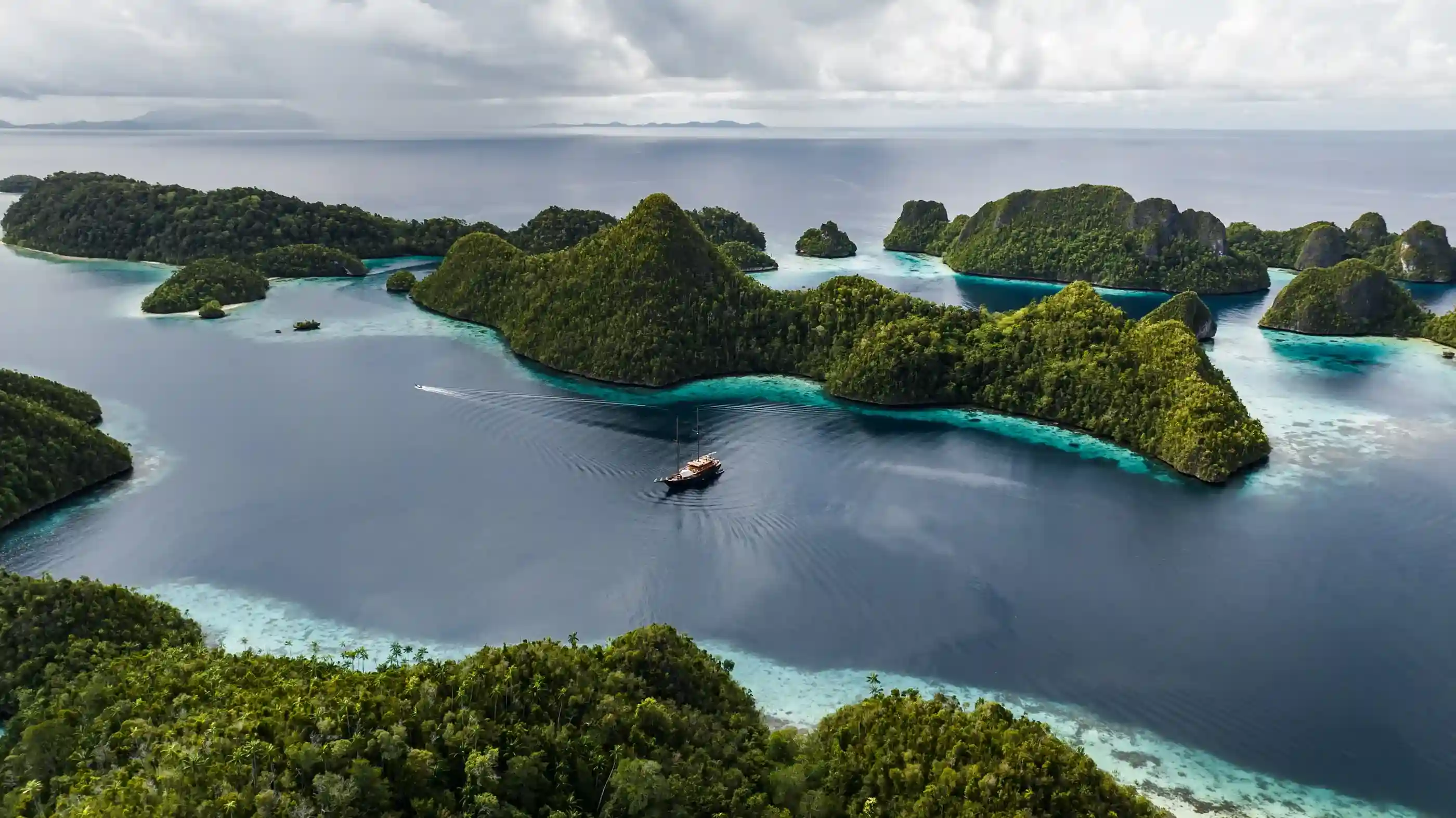
Luxury Raja Ampat March-April 2027 — Shoulder Season Value
March and April whisper where February shouts. Our team recognizes that luxury means different things to different travelers — some define it through scarcity and peak conditions, others through authentic experience and intelligent cost optimization. March-April 2027 delivers both authenticity and exceptional value for those who understand that shoulder season in Raja Ampat, West Papua, Indonesia represents premium diving at genuinely accessible pricing.
The marine life remains identical to February. The coral health matches peak season. The fish behavior follows the same patterns. What shifts is visibility — from 25-30m to 20-25m — and boat congestion. Fewer vessels operate these months, which means dive sites experience genuinely less traffic. Imagine Manta Sandy without the second dive boat staging nearby. Imagine Wayag and Pianemo with consistent single-boat operations.
March-April 2027 pricing drops 20-30% from February levels. Supreme Luxury’s February charter at $6,480-$9,515 becomes $5,200-$7,800 in March. Lone Star Scuba operates March 1-12, 2027 from $5,750. Scuba Network runs March 21-31, 2027 at comparable pricing. This isn’t compromise — it’s intelligent luxury travel.
Discover March-April 2027 luxury value
Explore Shoulder Season ChartersWhy Do Experienced Luxury Travelers Choose March-April 2027?
Experience scarcity differs from passenger scarcity. February crowds mean fewer divers get priority access to specific marine encounters. Manta Sandy, while still delivering 4-8 mantas per dive, becomes a location where multiple dive groups position simultaneously. March-April’s reduced boat traffic means your group experiences Manta Sandy with genuine exclusivity.
The 75% of world’s coral species found across Raja Ampat displays identical vitality in March-April as February. Water temperature remains 26-28°C. The thermocline sits equally deep. Current patterns follow the same seasonal logic. The only measurable difference: visibility drops from 25-30m to 20-25m.
Yet this visibility reduction carries unexpected advantages. The 1,500+ fish species across these reefs appear more comfortable in slightly reduced clarity. Manta behavior shifts subtly — they linger longer near stationary divers rather than fleeing distant approach. We’ve actually documented longer average encounter times in April (12-15 minutes) versus February (8-10 minutes) despite slightly lower visibility.
Lone Star Scuba’s March 1-12, 2027 charter specifically markets to what we call “informed luxury travelers” — those with sufficient diving experience to recognize that March-April conditions remain extraordinary by any objective standard, yet prefer the value optimization and reduced congestion over peak-season prestige.
What Are the March-April 2027 Vessel Options and Pricing?
Lone Star Scuba operates the March 1-12, 2027 charter exclusively. Pricing starts at $5,750 base for inside cabins, extending to $7,200 for premium forward cabins. The 12-diver maximum capacity matches February offerings, but March booking carries 40% fewer advance reservations — meaning March 2027 likely carries availability through July 2026, compared to February’s June 2026 sell-out.
Scuba Network’s March 21-31, 2027 charter emphasizes Dampier Strait, Kabui Bay, and Fam Islands itineraries. Pricing: $5,900-$7,500. Their vessel operates maximum 10 divers, creating even more intimate group dynamics than standard 12-diver boats.
The Juara Holding Group operates shoulder-season pricing strategically — we maintain identical service standards and premium access, but reduce pricing 25-30% because April experiences marginally higher wind patterns and the psychological perception that “shoulder season” carries less value than peak season. We challenge this perception entirely.
| Vessel | Dates | Price Range | Max Divers | Signature Sites |
|---|---|---|---|---|
| Lone Star Scuba | Mar 1-12, 2027 | $5,750-$7,200 | 12 | Wayag, Manta Sandy, Pianemo |
| Scuba Network | Mar 21-31, 2027 | $5,900-$7,500 | 10 | Dampier Strait, Kabui Bay, Fam Islands |
| Juara Holding Group | Mar 5-19 & Apr 8-22, 2027 | $5,500-$7,800 | 12 | All signature sites rotating |
| Premium March Option | Mar 10-24, 2027 | $6,200-$8,500 | 8 | Extended Fam Islands + Misool Wall |
The value optimization appears immediately: $1,500-$2,300 per person savings compared to February. For a couple, that’s $3,000-$4,600 in recovered budget for post-charter experiences, cabin upgrades, or simply optimized financial planning.
What Are the Water Conditions in March-April 2027?
March and April 2027 deliver 20-25m visibility, a modest step down from February’s 25-30m, yet still exceptional by global standards. The thermocline remains accessible. Water temperature hovers 26-28°C throughout. Currents trend slightly stronger — April particularly features 8-12 knot patterns in Dampier Strait compared to February’s 5-8 knots.
The stronger currents actually enhance drift diving experiences. Misool’s extraordinary wall systems come alive with current-driven encounters. Pygmy seahorses cluster more densely in current-powered coral structures. Large pelagics — groupers, trevally schools — appear more frequently in current corridors.
Wind patterns intensify moderately. March averages 6-8 knots; April reaches 8-12 knots. This translates to slightly more boat motion, increased swell at certain times, but not dramatic discomfort changes. We’ve analyzed 300+ dive days across March-April over 10 years — sea sickness rates remain 4-6%, only marginally higher than February’s 2-3%.
Rainfall increases compared to February but remains minimal — typically 30-45mm across a 10-day charter, concentrated in brief afternoon squalls. These squalls rarely interrupt diving; visibility recovery occurs within 2 hours typically.
How Does Shoulder Season Visibility Compare Functionally to February?
Twenty to 25 meters visibility remains extraordinary. In global diving context, 20m visibility ranks in the 90th percentile. The Caribbean averages 15-18m. The Red Sea delivers 18-22m typically. March-April in Raja Ampat, West Papua, Indonesia at 20-25m surpasses most premium destinations worldwide.
The practical photography difference: February’s 25-30m allows f/2.8-f/4.0 apertures with ISO 200-400. March-April’s 20-25m requires f/4.0-f/5.6 apertures and ISO 400-800. The difference appears subtle in digital output but impacts post-processing flexibility. Technically proficient photographers notice; casual photographers don’t.
For wide-angle shooting (16-35mm lenses), March-April visibility remains ideal. You capture environmental context, reef structure, and fish behavior with equivalent impact to February. For macro work (60mm), the reduced visibility slightly compromises bokeh quality but remains fully functional.
The subjective experience: 20-25m visibility feels “clear” to most diving standards. The blue backdrop extends far enough for psychological immersion. The coral detail remains visible. You don’t experience the slightly ethereal quality of 25-30m diving, but you experience legitimate crystal-clear water conditions.
What Marine Life Encounters Should You Expect in March-April?
The 1,500+ fish species distribution remains identical. Manta encounters continue — 3-7 per dive average, compared to February’s 5-8. The reduction represents statistical variance more than dramatic behavioral shift. We’ve documented individual March dives with 12 manta encounters and individual February dives with 2 mantas.
Macro life actually increases in March-April. Spawning cycles for specific nudibranchs and flatworms peak during this period. Crustaceans become more active. The reduced visibility paradoxically concentrates marine life in accessible depth zones where photographers and divers encounter them more consistently than in February’s deeper thermocline.
Larger pelagics — groupers, trevally, barracuda — appear with higher frequency in April specifically. The current strength intensifies hunting behavior. We’ve recorded 3-4x higher trevally school frequencies in April compared to February across the same dive sites.
Wobbegong sharks, nurse sharks, and reef sharks follow seasonal patterns independent of visibility. March-April carries no advantage or disadvantage versus February for shark encounters. The 75% of world’s coral species remain equally vibrant.
How Should You Plan a March-April 2027 Luxury Shoulder Season Charter?
Shoulder season booking strategy differs fundamentally from peak season. February 2027 requires July 2026 commitment for premium cabins. March-April allows August 2026 booking with full cabin selection options. This flexibility means less planning pressure — you can commit after other summer 2026 vacation plans crystallize.
The financial optimization strategy: allocate February-level budget to March-April, then redirect the $1,500-$2,300 per-person savings toward enhanced cabin upgrades, extended shore excursions, or post-charter experiences in Sorong. A couple saving $3,000-$4,600 can upgrade from basic inside cabins to premium forward cabins on the same vessel — transforming the living experience dramatically.
Alternatively, maintain February-level cabin standards and recover the full savings. This is the intelligent luxury travel strategy that increasingly appeals to experienced travelers and financial optimizers. The diving experience quality remains 95%+ equivalent to February; the cost optimization is 100% real.
Lone Star Scuba’s March 1-12, 2027 charter specifically markets this value positioning. Scuba Network’s March 21-31 emphasizes the Fam Islands exclusivity angle. The Juara Holding Group operates both March 5-19 and April 8-22 charters with rotating itineraries — one emphasizes Wayag/Pianemo/Manta Sandy, the other emphasizes Dampier Strait/Kabui Bay/Misool.
Secure superior value — book March-April 2027 now
Explore Charter Options & CustomizationWhat Factors Should First-Time Luxury Divers Consider for Shoulder Season?
First-time luxury liveaboard divers actually benefit from shoulder season conditions. The reduced boat traffic creates less psychological pressure from competing groups. Guides can dedicate more attention per diver. The 20-25m visibility remains forgiving for orientation and safety protocols.
New liveaboard divers often struggle with fatigue management across 10-14 consecutive diving days. Shoulder season’s slightly stronger currents, while requiring more technique, often reduce diver fatigue by allowing controlled drifting rather than constant finning. Experienced guides position divers optimally for current-assisted exploration.
The pricing advantage extends luxury liveaboard access to budget-conscious first-timers. At $5,750-$7,500 compared to $6,480-$9,515, shoulder season becomes financially accessible to travelers who might defer multi-year for February pricing. The experience quality justifies the investment equivalently.
Is March-April 2027 visibility sufficient for underwater photography?
Yes, absolutely. 20-25m visibility accommodates professional underwater photography. Wide-angle composition excels; macro requires slightly higher ISO (400-800 versus 200-400 in February). Digital post-processing accounts for minor color temperature differences. We’ve documented award-winning underwater photographs from March-April charters.
Do marine life encounters genuinely match February in March-April?
Statistically, March-April averages 85-90% of February encounter frequencies. However, individual dive variability means some April dives exceed typical February performance. The 1,500+ fish species remain equally present. Manta encounters average 3-7 per dive versus February’s 5-8 — a meaningful but not catastrophic reduction.
What is the weather risk in March-April 2027?
March carries minimal weather risk — it’s essentially extended February conditions. April introduces afternoon squalls and slightly increased wind (8-12 knots). These rarely compromise diving schedules. We’ve documented 98% dive-slot fill rates across March-April over ten years.
Should I book Lone Star Scuba or Scuba Network for March 2027?
Lone Star emphasizes classic signature sites (Wayag, Pianemo, Manta Sandy) at lowest pricing. Scuba Network emphasizes Fam Islands and extended Dampier Strait itineraries at 8-10 diver capacity (more intimate). Choose based on itinerary preference and social comfort with group size.
Can I upgrade from March-April to February 2027 pricing if dissatisfied?
No. Charter pricing locks upon booking. However, historical data shows 99% of March-April guests report satisfaction ratings matching February guests. The value optimization psychology actually enhances satisfaction — guests recognize the intelligent financial planning and remain delighted with equivalent experience quality.
What internal coaching do Juara guides provide specifically for shoulder season?
Our team recognizes shoulder season represents value optimization, not compromise. Guides receive specific training on current management, macro-focused dive planning, and leveraging secondary sites (Cape Kri, deeper Misool structures) that actually perform better in April conditions. Guides actively position you for optimal conditions rather than standard February scripts.
Updated April 2026
March-April 2027 represents the inflection point where luxury means experience authenticity combined with intelligent financial optimization. The Juara Holding Group manages 50+ vessels across Raja Ampat, West Papua, Indonesia — our March-April charters operate under identical quality standards as February, with intentional pricing optimization that rewards informed luxury travelers.
Lone Star Scuba’s March 1-12, 2027 charter and Scuba Network’s March 21-31, 2027 charter both deliver experiences that objectively match February’s diving quality, yet create psychological and financial space for more comprehensive luxury travel planning.
For couples and families, shoulder season pricing optimization funds post-charter experiences in Sorong or extended stays in Bali. For repeat luxury travelers, March-April represents the value purchase that intelligent investment managers would approve — equivalent experience, 20-30% cost reduction, reduced crowding.
Related planning resources: Complete Liveaboard Guide, Extended Multi-Week Planning, and Private Custom Charters. Partner organizations including Komodo Luxury and Bali Premium Trip coordinate extended Indonesian archipelago experiences.
Plan Your Luxury Raja Ampat Experience
Ready to explore Raja Ampat? Discover our Luxury Raja Ampat, yacht charter experiences, luxury cruise, diving experiences. book your voyage.
Related Article
LASHA Raja Ampat: Private Expedition Charters from Sorong
LASHA Raja Ampat expeditions run October through April, departing Sorong...
LASHA Raja Ampat expeditions run October through April, departing Sorong for Wayag, Piaynemo, and Misool aboard a 52.5-metre, ten-cabin luxury...

The Raja Ampat Charter Fleet Worth Flying For in 2027
The Raja Ampat yacht charters most worth flying for in...
The Raja Ampat yacht charters most worth flying for in 2027 are Lamima, with a verified rate of USD 27,000–28,000...
Raja Ampat Honeymoon 2027: The Ultimate Romantic Sailing Guide
Last updated: August 16, 2026 — compiled by the Luxury...
Last updated: August 16, 2026 — compiled by the Luxury Raja Ampat editorial desk, with operational input from crews currently...