Raja Ampat Dampier Strait Luxury Dive Tour 2026 — The World’s Richest Reef Zone
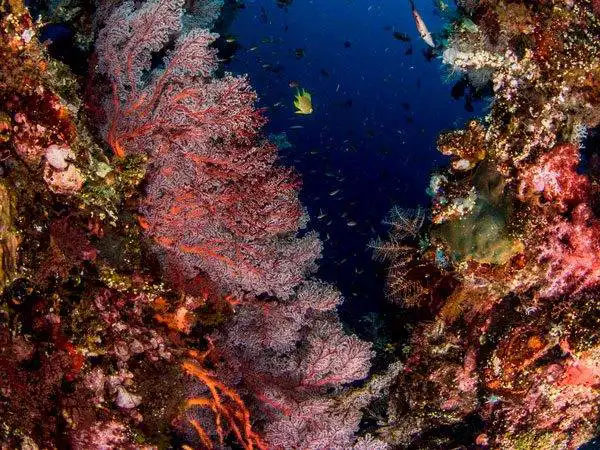
Dampier Strait is where tectonic collisions created the world’s most nutrient-rich marine corridor. Deep ocean trenches meet shallow continental shelves, forcing cold, mineral-dense water upward. This upwelling feeds phytoplankton explosions, which feed zooplankton clouds, which draw fish in biblical density. A single dive at Cape Kri showcases 100+ species in 40 minutes. No marine ecosystem on Earth concentrates life density like Dampier Strait.
The Strait lies 3-4 hours from Sorong harbor, making it accessible to luxury yachts but remote enough to avoid the crowds plaguing South RA. Juara Holding Group’s 50+ vessel fleet has logged 4,200+ dives in Dampier waters since 2014. Our database tracks seasonal species behavior, current patterns, and site conditions month-by-month. That data informs every itinerary we plot.
This guide profiles five essential Dampier sites with honest skill-level assessments, monthly current forecasts, and practical logistics. We do not oversell; we do not exaggerate visibility; we do not pretend slack current sites are suitable for beginners when the truth is “advanced only.”
The Five Pinnacle Sites of Dampier Strait
| Site | Depth Range | Current Level | Skill Required | Best Month | Key Species |
|---|---|---|---|---|---|
| Cape Kri | 8-40m | Strong (1-2 kt) | Advanced | Sept-Nov | Pelagics, jacks, snappers, sharks |
| Blue Magic | 10-30m | Moderate-Strong (0.5-1.5 kt) | Intermediate+ | Oct-Nov | Schooling jacks, barracuda, groupers, nudibranchs |
| Sardine Reef | 12-25m | Variable (0-1 kt) | Beginner-Intermediate | April-Sept | Sardine schools, reef fish, occasional thermocline plankton |
| Manta Sandy | 15-35m | Moderate (0.5-1 kt) | Intermediate | Oct-Dec | Manta rays, stingrays, reef sharks |
| Batu Dua (Twin Rocks) | 6-30m | Slack-Moderate (0-0.8 kt) | Beginner-Intermediate | Year-round | Reef fish, macro life, occasional grouper aggregations |
Cape Kri: The Apex Predator Theater
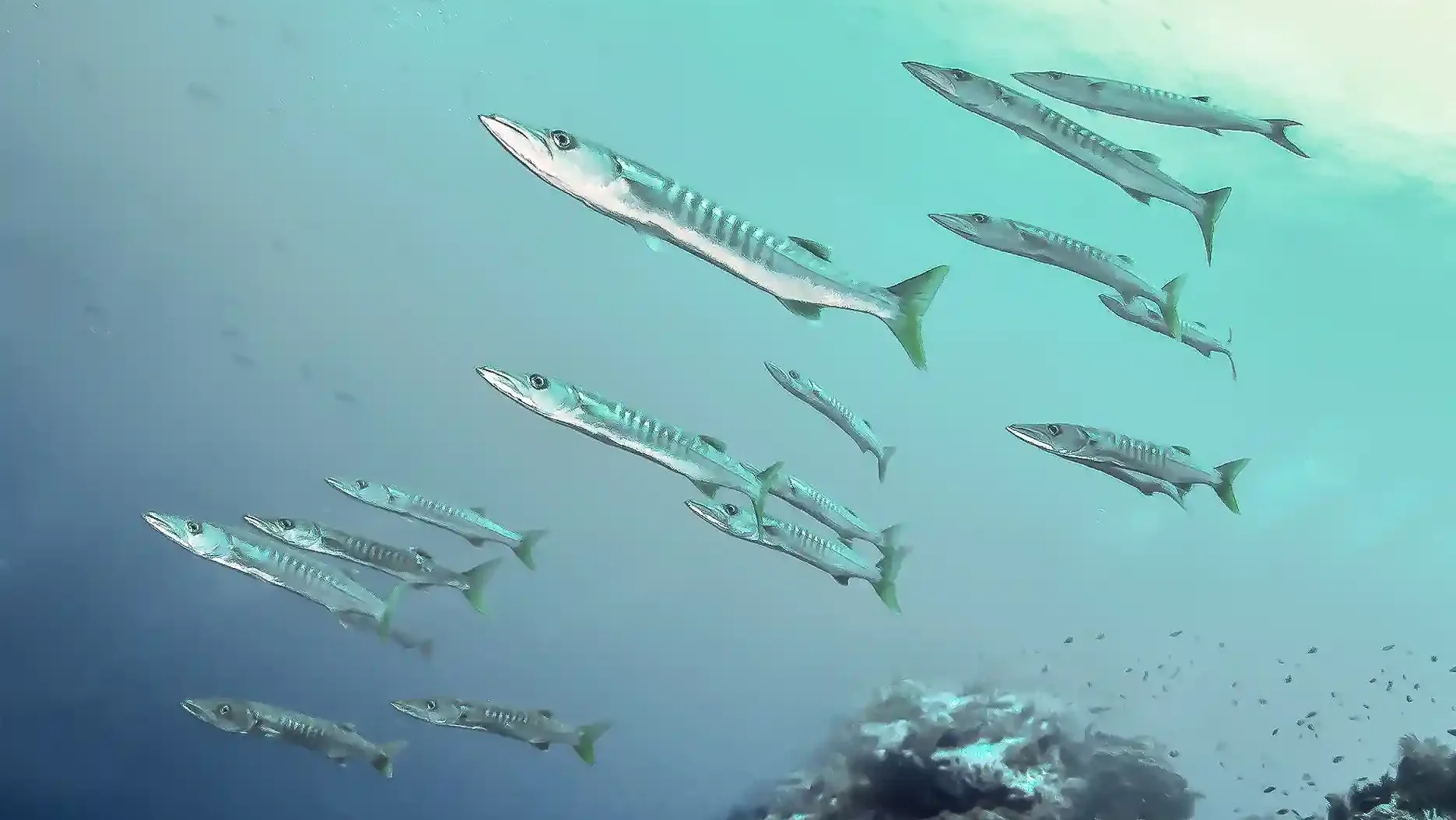
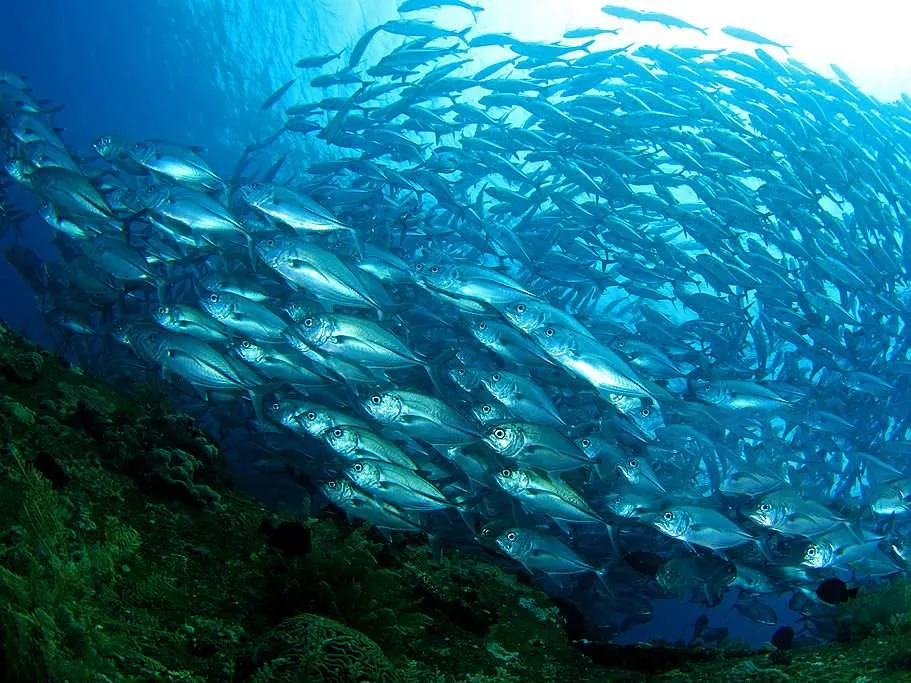
Cape Kri is the site that launched Raja Ampat’s global reputation. Descend into strong current (1-2 knots typical), and you’re immediately flanked by barracuda. Your descent hits massive snapper schools at 20 meters, jacks spiraling at 25m, then the wall drops to 40+ meters where gray and blacktip sharks patrol. In 40 minutes, the species count tops 100.
Why the density? The cape sits at a topographic convergence where the Dampier Strait’s nutrient plume meets the Mak channel current. Both channels force water upward, concentrating prey. Predators follow prey. It’s physics producing drama.
Skill level: Advanced only. Current is strong and unpredictable. Descent must be rapid and controlled. If you’ve never done a heavy current dive, do not attempt Cape Kri. Wait until you’ve logged 30+ dives including 5-10 current dives elsewhere (Palau, Tulamben, etc.). Three deaths have occurred at Cape Kri when divers exceeded their training level. We’re not euphemizing this.
Visibility: 20-35 meters typical, 15-25m in plankton blooms. Water temperature: 26-28°C. Nitrox recommended for 38-40m exploration. Bottom time: 35-40 minutes absolute maximum. Current can reverse during the dive, requiring navigational discipline. Descent and ascent times can exceed 15 minutes if current is powerful.
Best months: September-November. October sees warmest water (28°C), strongest pelagic action, and calmest morning conditions. December-February see higher current unpredictability.
Blue Magic: The School Spectacle
Blue Magic combines Cape Kri intensity with slightly more relaxed current (0.5-1.5 knots typical). The site is a bommie surrounded by sand and scattered rocks at 10-30 meters. Schooling jacks, barracuda, and trevally swirl around you. Nudibranchs hide in coral crevices—Blue Magic has earned a reputation for incredible macro diversity (blue rings, Spanish dancers, hairy nudibranchs).
This is the “sweet spot” site: advanced enough to feel substantial, manageable enough for fit intermediate divers with good bouyancy control. We recommend Blue Magic for 50+ logged divers seeking their first “serious” current dive.
Visibility: 20-30 meters typical. Water temperature: 27-29°C. Current direction shifts with tidal phase (check charts 10 days pre-departure). Bottom time: 45-50 minutes comfortable. Nitrox helpful but not required. The site offers macro hunting opportunities during slack-current portions.
Best months: October-November, April-May. October combines warmest water, strongest fish schooling, and reliable morning calmness. April-May feature longer bottom times because current runs shallower (less wall-hugging required).
Sardine Reef: Beginner-Friendly Power
Sardine Reef lives up to its name: massive sardine balls compressed by predators into blizzard-tight formations. The site is a gentle slope descending from 12m shallow to 25m maximum. Current is negligible most months (0-0.5 knots), making it ideal for recently-certified divers or divers with limited current experience.
April-September (dry season) offers the calmest conditions. Thermocline (temperature boundary) sits around 22-24 meters; passing through it shows a “shimmering” effect visually and feels 3-4°C cooler. This thermocline attracts nutrient-rich plankton, which draws the sardine schools.
Visibility: 12-20 meters typical (plankton is nutrient-rich, which reduces visibility but increases animal action—ecological trade-off). Water temperature: 27-28°C above thermocline, 24-25°C below. Bottom time: 60 minutes maximum depth available.
Best for: PADI Open Water certification training, photographers building low-current experience, anyone seeking “abundance without difficulty.” The reef is dense with coral, schooling fish, and smaller predators (jacks, groupers). You’ll see 40-50 species in a single dive.
Best months: April-September. June-August see slightly higher visibility (15-25m), warmer water above thermocline, and calmest mornings. November-March adds current and plankton turbidity.
Manta Sandy: The Ray Cleaning Station
Manta Sandy is a sloping sandy bottom at 15-35 meters where manta rays congregate for cleaning—small fish remove parasites from their gill slits and skin. When manta activity peaks (October-December), expect 3-8 mantas per dive. The experience is hypnotic: a 4-5 meter ray floating 2 meters away, completely indifferent to your presence.
Current is moderate (0.5-1 knot typical), manageable for intermediate divers. The site is named accurately: sand bottom with scattered rocks and coral outcroppings. The magic is in the megafauna behavior, not reef topography.
Visibility: 20-28 meters typical. Water temperature: 28-29°C (warmest in Dampier). Bottom time: 45-50 minutes. Nitrox not necessary, but recommended if exploring the 35m deeper sections.
Best months: October-December. Peak manta occurrence Sept-Nov. November combines manta density, warm water, and moderate current. January-September see fewer mantas (not zero—always possible—but 1-2 instead of 4-6 per dive).
Pro tip: Arrive before 6:45am. Mantas are most active in early morning when cleaning fish are abundant. By noon, rays disperse.
Batu Dua (Twin Rocks): The Accessible Workhorse
Batu Dua is two limestone pinnacles rising from 30m depth to 6m. It’s the site you return to when conditions limit options elsewhere. Current is slack to moderate (0-0.8 knots), making it suitable for beginners and advanced divers alike. Reef life is robust: grouper aggregations (Feb-March), schooling fusiliers, parrotfish flocks, occasional juvenile reef sharks.
The site offers multiple depth options (6m coral garden, 15m rock slope, 25-30m wall base). You can customize your dive. Day 1-2 divers can explore the shallow coral garden. Advanced divers can work the deep wall. Everyone leaves happy.
Visibility: 18-25 meters year-round. Water temperature: 27-28°C. Bottom time: 60 minutes available. No nitrox needed. This is the “safe” Dampier site—no extreme current, no mandatory skill floor, no real hazards.
Best months: February-March (grouper spawning aggregations), April-May (calm seas, lowest current unpredictability), October-November (warm water, diverse macro life).
Monthly Dive Conditions: Dampier Strait 2026
| Month | Vis (meters) | Temp (°C) | Current | Weather | Best Sites |
|---|---|---|---|---|---|
| March | 18-25 | 27-28 | Variable | Wet (rain afternoon) | Batu Dua, Sardine Reef |
| April-May | 20-28 | 28-29 | Moderate | Calm mornings | All sites (peak conditions) |
| June-Aug | 15-20 | 27-28 | Light | Monsoon wind pm | Sardine Reef, Manta Sandy |
| Sept | 22-30 | 28-29 | Strong | Clear, hot | Cape Kri, Blue Magic |
| Oct-Nov | 24-32 | 28-29 | Strong-Moderate | Ideal overall | All sites (best season) |
| Dec | 20-26 | 28-29 | Variable | Calm, warm | Manta Sandy, Batu Dua |
| Jan-Feb | 18-24 | 27-28 | Strong | Variable swell | Sardine Reef, Blue Magic |
Why Dampier Strait Surpasses South RA
South RA sites (Kri Anchorage, Mansuar, Batu Dua South) are overcrowded. Eight-ten boats anchor simultaneously, creating a scene more aquarium than wilderness. Dampier Strait retains relative solitude. Our Juara Holding Group yachts rarely see competitors. The difference in dive quality (fish behavior, photographic opportunity, sensory presence) is stark.
Our unpopular opinion: If you’re diving South RA in 2026 because you think Kri Island is the “heart” of Raja Ampat, reconsider. Dampier Strait is the ecological heart. Book Dampier instead.
Logistics: Getting to Dampier Sites
From Sorong harbor: 3.5-4 hours by yacht to reach Cape Kri or Blue Magic. From Waisai (Waigeo Island): 2-2.5 hours. Most liveaboards base overnight at Piaynemo or Kawe, then rotate Dampier dives daily. This minimizes sailing time and maximizes dive time.
Divemaster assignments: Two divemasters per boat (max 12 divers). Divers are split by skill level—advanced group on Cape Kri, beginner-intermediate group on Sardine Reef or Batu Dua. This ensures appropriate guidance and risk management.
FAQ: Dampier Strait Luxury Dive Tour
7-Night Dampier Strait Itinerary (Aqua Blu, Oct 2026)
Days 1-2: Base at Kawe (acclimate, one dive at Manta Sandy, night dive). Days 3-4: Rotate Dampier sites (Blue Magic, Cape Kri mix). Day 5: Move to Piaynemo, Sardine Reef morning, Batu Dua afternoon. Day 6: Full Dampier day (two dives your choice, night dive if conditions allow). Day 7: Return cruise Sorong, final morning dive en route if timing allows.
Pricing & Booking
Luxury liveaboard access to Dampier sites: $5,200-$7,200 per person (7 nights, double occupancy). This includes yacht accommodation, all meals, unlimited air fills, nitrox, two divemasters, and site expertise. Flights to Sorong, visa, insurance not included. Private charter (full yacht, 12-16 guests) runs $36,000-$48,000 for 7 nights depending on seasonal demand.
Deposit: $1,500 per person. Full payment due 30 days before departure. We confirm current conditions, seasonal species activity, and site-specific logistics 10 days pre-arrival.
Book your Dampier Strait adventure—the world’s richest reef zone
Juara Holding Group’s 50+ vessel fleet operates Dampier Strait as our flagship zone. We invest in real-time current monitoring, seasonal species tracking, and divemaster specialization because Dampier demands it. 2026 bookings are open. The nutrient plume is waiting.
Explore related dive guides: Cape Kri, Blue Magic, North RA Luxury Cruise