
What is the Best Diving in Indonesia? Raja Ampat vs Komodo vs Bunaken vs Lombok Luxury Guide

Luxury Raja Ampat Editorial Desk
April 12, 2026
16 min read
What is the Best Diving in Indonesia? Raja Ampat vs Komodo vs Bunaken vs Lombok — Luxury Guide 2026
You’re standing in a dive shop in Bali, overwhelmed. Five destinations. Five different arguments for “the best.” One trip budget.
We’ve been running luxury operations in Raja Ampat and Komodo for over a decade. Our team operates 50+ vessels across these regions. We can tell you with certainty: there is no single “best.” There’s the destination that matches your specific objectives.
This guide breaks down five major Indonesian dive destinations by marine life, season, cost, luxury infrastructure, and what each excels at. We’ll help you choose based on what you actually want to experience, not marketing hype.
What Makes Raja Ampat the Most Biodiverse Dive Destination?
Numbers. Pure numbers.
Raja Ampat contains 600+ coral species. That’s roughly 75% of all known coral species on Earth. Compare: Komodo has 350-400 coral species. Bunaken: 300+ species. Wakatobi: 400+ species.
Fish diversity is even starker. Dr. Gerald Allen, the leading ichthyologist for Southeast Asia, recorded 374 fish species at a single site—Cape Kri in Raja Ampat. That’s one dive site. One location. 374 distinct species observed in a single study.
Total fish species across Raja Ampat: 1,500+. Across all of Komodo: 850+. Across Bunaken: 700+.
Walking sharks (Hemiscyllium species), found nowhere else on Earth except Raja Ampat and parts of Australia. Pygmy seahorses (multiple species), a photographer’s obsession. Manta rays, aggregating predictably at specific sites (Manta Sandy, Dampier Strait) in specific seasons.
Raja Ampat’s UNESCO Biosphere Reserve designation (September 2025) recognized this biological significance. The reserve protects 46,000 km² of marine habitat, the largest marine protected area in Southeast Asia dedicated to biodiversity preservation.
How Does Komodo Compare to Raja Ampat?
Komodo is not “second best.” It’s best for a different set of objectives.
| Factor | Raja Ampat | Komodo | Winner |
|---|---|---|---|
| Coral Species | 600+ | 350-400 | Raja Ampat |
| Fish Species | 1,500+ | 850+ | Raja Ampat |
| Visibility | 25-30m (Oct-Apr) | 30-40m (Apr-Dec) | Komodo |
| Large Pelagic Fish | Good (manta rays) | Excellent (sharks, rays, tuna) | Komodo |
| Current Difficulty | Mild (2-5 knots) | Strong (3-8 knots) | Raja Ampat |
| Year-Round Diving | October-April peak | April-December peak | Komodo |
| Luxury Infrastructure | 50+ vessels, premier ops | 25+ vessels, emerging ops | Raja Ampat |
| Cost (Liveaboard/night) | $100,000-250,000 USD | $80,000-200,000 USD | Komodo |
Raja Ampat is superior for: biodiversity, macro photography, intermediate divers, calm conditions, and year-round operations (October-April). Komodo excels at: large marine life encounters, advanced drift diving, superior visibility, and unpredictable thrills.
Juara Holding Group operates both destinations at premium levels. For 2026-2027, we offer multi-destination packages: 7 days Raja Ampat + 5 days Komodo, arranged with flight coordination through Bali and Flores.
What About Bunaken? Is It Still Worth Visiting?
Yes, but with caveats.
Bunaken is North Sulawesi’s flagship dive site. Wall diving is exceptional. Visibility can reach 20-25m. Fish life is good (700+ species). The challenge: coral health has declined. Live coral cover at Bunaken Wall is 30-40%, down from 60%+ in the 1990s. Strong currents (2-3 knots typical) can be exhausting.
Bunaken works best for: wall diving specialists, photographers focused on topography and fish behavior, divers seeking less crowded infrastructure, and budget-conscious luxury travelers (liveaboards start at $50,000 USD/night).
Bunaken doesn’t work for: macro enthusiasts, beginning intermediate divers, coral health advocates, or those seeking year-round operations. January-March visibility can drop to 10-15m.
Our team recommends: visit Bunaken if it aligns with your specific skill level and interests. Don’t visit solely because it’s “famous.” Raja Ampat and Komodo deliver superior experiences for most luxury divers.
What About Wakatobi and Alor?
Both are exceptional.
Wakatobi (Southeast Sulawesi) is the macro diving capital of Indonesia. 400+ coral species, an embarrassment of nudibranchs, pygmy seahorses, mantis shrimp, ghost pipefish. The luxury liveaboard experience is mature and professional. Visibility is consistently 15-20m. Cost: $90,000-180,000 USD/night.
Wakatobi is ideal for: macro photographers, technical divers, coral enthusiasts, and those seeking year-round diving (though October-April is preferred).
Alor (East Nusa Tenggara) is emerging as a premium dive destination. Cold-water upwelling systems create unexpected biodiversity. Mola mola (ocean sunfish) appear seasonally. Visibility is 10-18m. Cost: $60,000-140,000 USD/night (fewer luxury options). Year-round diving possible, but seasonal variance is high.
Alor is best for: adventurous divers seeking less-explored sites, those interested in mola mola encounters (July-September), and budget-conscious travelers.
Lombok and the Gili Islands — Why We Don’t Recommend Them
Lombok is marketed heavily as a “budget alternative.” Skip it.
Coral cover at popular Gili Island sites: 15-25%. Fish biodiversity: 400-500 species. Visibility: 8-15m. Instruction quality varies widely. Most operations are shore-based day trips; liveaboards are rare and basic.
Lombok works only for: beginner divers on tight budgets, resort-based training, or quick day trips while in Bali. For luxury travel, the value proposition doesn’t justify the cost difference. A $10,000/week savings in liveaboard cost vs. Raja Ampat isn’t worth the biodiversity loss.
What is the Best Diving Season Across Indonesian Destinations?
| Destination | Peak Season | Visibility | Sea Conditions | Water Temp |
|---|---|---|---|---|
| Raja Ampat | Oct-Apr | 25-30m | Calm | 28-29°C |
| Komodo | Apr-Dec | 30-40m | Strong currents | 26-28°C |
| Bunaken | Dec-Apr | 20-25m | Variable | 28-29°C |
| Wakatobi | Oct-Apr | 15-20m | Mild | 28-29°C |
| Alor | Jul-Sep (mola mola) | 12-18m | Strong currents | 24-26°C (cold) |
For 2026-2027, the safest season across all major destinations is October-April. This aligns with Northern Hemisphere winter holidays and Australian summer. Booking for January-March 2027 is highly competitive; reserve by August 2026.
Which Indonesian Destination Offers the Best Luxury Infrastructure?
Raja Ampat. No debate.
Luxury vessel fleet: Raja Ampat has 50+ liveaboards and yachts, ranging from 30-person capacity ships to 12-person micro-charters. Fleet age: average 8-12 years (regularly maintained). Amenities: premium suites, fresh seafood kitchens, nitrox filling stations, camera rooms on flagship vessels.
Komodo liveaboards: 25+ vessels, developing market, fleet quality variable (5-20 years old). Some premium options exist; many are mid-range.
Bunaken liveaboards: Limited (5-8 options). Most budget to mid-range. Shore-based resorts dominate (30+ resorts, quality variable).
Wakatobi liveaboards: 8-12 options, several premium-grade operations. Established market, mature infrastructure.
Alor liveaboards: Emerging, 3-5 options, mostly mid-range.
Juara Holding Group operates the largest fleet in Raja Ampat and Komodo. For 2026-2027, we’re expanding to 55+ vessels, including three new ultra-luxury micro-charters (10-14 person capacity, starting at $280,000 USD/person/night). Cross-brand booking through Komodo Luxury and Indonesia Juara Trip provides seamless coordination.
What is the True Cost of Luxury Diving in Indonesia?
Liveaboard pricing, per person, per night, 2026-2027:
| Destination | Budget Cabin | Premium Cabin | Suite | Private Charter |
|---|---|---|---|---|
| Raja Ampat | $70,000 | $120,000-180,000 | $180,000-250,000 | $280,000-400,000 |
| Komodo | $50,000 | $80,000-140,000 | $140,000-200,000 | $200,000-300,000 |
| Bunaken | $35,000 | $50,000-80,000 | $80,000-120,000 | Limited |
| Wakatobi | $60,000 | $90,000-140,000 | $140,000-180,000 | Limited |
All-inclusive pricing includes: food (breakfast, lunch, dinner, snacks), beverages (coffee, tea, soft drinks), guided dives (3-4 per day), dive guide, equipment rental, air fills, nitrox fills.
Flights add: Sydney-Sorong (Raja Ampat): AUD 800-2,500 return. Tokyo-Sorong: JPY 80,000-150,000 return. Seoul-Sorong: KRW 900,000-1,800,000 return.
For a 7-night luxury liveaboard in Raja Ampat (premium cabin), expect: $840,000-1,260,000 USD all-inclusive + flights. Total: $900,000-1,350,000 USD per person for a complete trip from major Eastern airports.
Which Indonesian Destination is Best for Specific Objectives?
Match your goals to the destination:
Biodiversity and macro photography: Raja Ampat (600+ corals, 1,500+ fish species). Second choice: Wakatobi (macro specialist). Third: Alor (emerging mola mola territory).
Large marine life (sharks, mantas, tuna): Komodo (30-40m visibility, strong currents, pelagic concentrations). Second: Raja Ampat (manta aggregations at specific sites).
Wall diving and topography: Bunaken (vertical walls, 20-25m visibility). Second: Komodo (dramatic underwater canyons).
Beginner divers: Raja Ampat (calm October-April, sheltered sites like Arborek, Melissa’s Garden). Second: Wakatobi (year-round gentle diving). Avoid: Komodo (strong currents, difficult conditions).
Advanced/technical divers: Komodo (strong currents, deep walls, challenging conditions). Second: Alor (cold-water upwelling, advanced current management).
Budget-conscious luxury: Bunaken (lowest per-night rates: $35,000-80,000 USD). Second: Alor (emerging market, lower prices). Third: Komodo.
Year-round diving: Wakatobi (operating 12 months). Second: Alor (limited November-June). Raja Ampat and Komodo are highly seasonal.
Professional water photography work: Raja Ampat (Backscatter 2027 workshop, camera equipment infrastructure, 1,500+ species subjects).
Is Raja Ampat Really Better Than Komodo, or is it Marketing?
It’s measurable.
Coral species: Raja Ampat 600+, Komodo 350-400. Measured by scientific surveys (Dr. Gerald Allen, Reef Check Indonesia). Not marketing.
Fish species: Raja Ampat 1,500+, Komodo 850+. Same surveys. Not marketing.
Walking sharks (Hemiscyllium species): found only in Raja Ampat and Australia. You can’t find them in Komodo. Fact.
UNESCO Biosphere Reserve: Raja Ampat designated September 2025. Komodo is a UNESCO World Heritage Site but not a Biosphere Reserve (different designation, less stringent conservation focus). Komodo National Park protects marine life but is heavily regulated for tourism, with daily visitor caps and managed access. Raja Ampat’s Biosphere status emphasizes scientific research and sustainable use alongside protection.
That said: Komodo offers visibility (30-40m vs. Raja Ampat’s 25-30m) and more dramatic large-fish encounters. Both are world-class. The “better” destination depends on your specific priorities. Raja Ampat is objectively more biodiverse. Komodo is objectively clearer and more exciting for pelagic encounters.
What is the Commitment to Sustainability in Indonesian Dive Destinations?
Highly variable.
Raja Ampat: UNESCO Biosphere Reserve (September 2025), 46,000 km² protected, ranger patrols, no fishing permitted in core zones. Juara Holding Group operates under strict environmental standards: limit 4 divers per guide, mandatory buoy use at all sites, waste management onboard, coral damage monitoring, seasonal site closures for recovery.
Komodo: UNESCO World Heritage Site, daily visitor caps (approximately 5,000 per day across all zones), but tourism pressure remains high. Komodo’s marine protected area covers 1,817 km²—much smaller than Raja Ampat.
Bunaken: National Marine Park (1989), 890 km² protected, but inadequate funding for ranger patrols. Coral health declining. Tourism pressure exceeding carrying capacity. Enforcement inconsistent.
Wakatobi: Marine protected area (1996), 1,390 km², more sustainable operations than Bunaken, but less rigorous enforcement than Raja Ampat.
For sustainability-conscious travelers, Raja Ampat is the strongest choice. The UNESCO Biosphere Reserve designation carries international scientific oversight. Juara Holding Group’s operations are audited annually by Indonesian environmental agencies and international NGOs.
Should I Visit Multiple Indonesian Dive Destinations in One Trip?
Logistically challenging. Not recommended for most travelers.
Typical multi-destination itinerary: Raja Ampat (7-10 days) + Komodo (5-7 days) + Bali transit (2-3 days). Total: 14-20 days. Flights required: Sorong to Bali (3 hours), Bali to Flores/Labuan Bajo (2.5 hours). Liveaboard timing: Raja Ampat typically operates Oct-April; Komodo April-December. Overlap is April-May and December, narrow windows.
Better approach: specialize. Commit 10-14 days to a single destination. October-April, go deep into Raja Ampat. April-December, commit to Komodo.
Exception: Juara Holding Group’s multi-brand packages. We operate both Raja Ampat (50+ vessels) and Komodo Luxury (25+ vessels). For 2026-2027, we offer coordinated multi-destination packages with flight arrangements and seamless liveaboard transitions. Pricing: $1,200,000-1,800,000 USD per person for 14 days (both destinations, premium cabins, flights included).
Final Recommendation: Which Indonesian Destination Should I Choose?
Decision tree:
If you want: maximum marine biodiversity, macro photography, calm diving conditions, year-round professional infrastructure → Raja Ampat.
If you want: large marine life encounters, superior visibility, advanced drift diving, less crowded infrastructure → Komodo.
If you want: wall diving specialization, budget-conscious options, shore-based alternatives → Bunaken.
If you want: macro/technical specialization, year-round diving, emerging destination prestige → Wakatobi.
If you want: adventure, mola mola encounters, least-explored sites → Alor.
For most luxury travelers, the answer is Raja Ampat. It combines world-leading biodiversity (75% of Earth’s coral species), year-round peak season (October-April), professional luxury infrastructure (50+ vessels operated by Juara Holding Group), and scientific credibility (UNESCO Biosphere Reserve, Dr. Gerald Allen’s research, Condé Nast Traveler #1 Southeast Asia 2026 ranking).
Plan Your Luxury Raja Ampat Experience
Ready to explore Raja Ampat? Discover our diving experiences, liveaboard adventures, yacht charter experiences, book your voyage. book your voyage.
Related Article
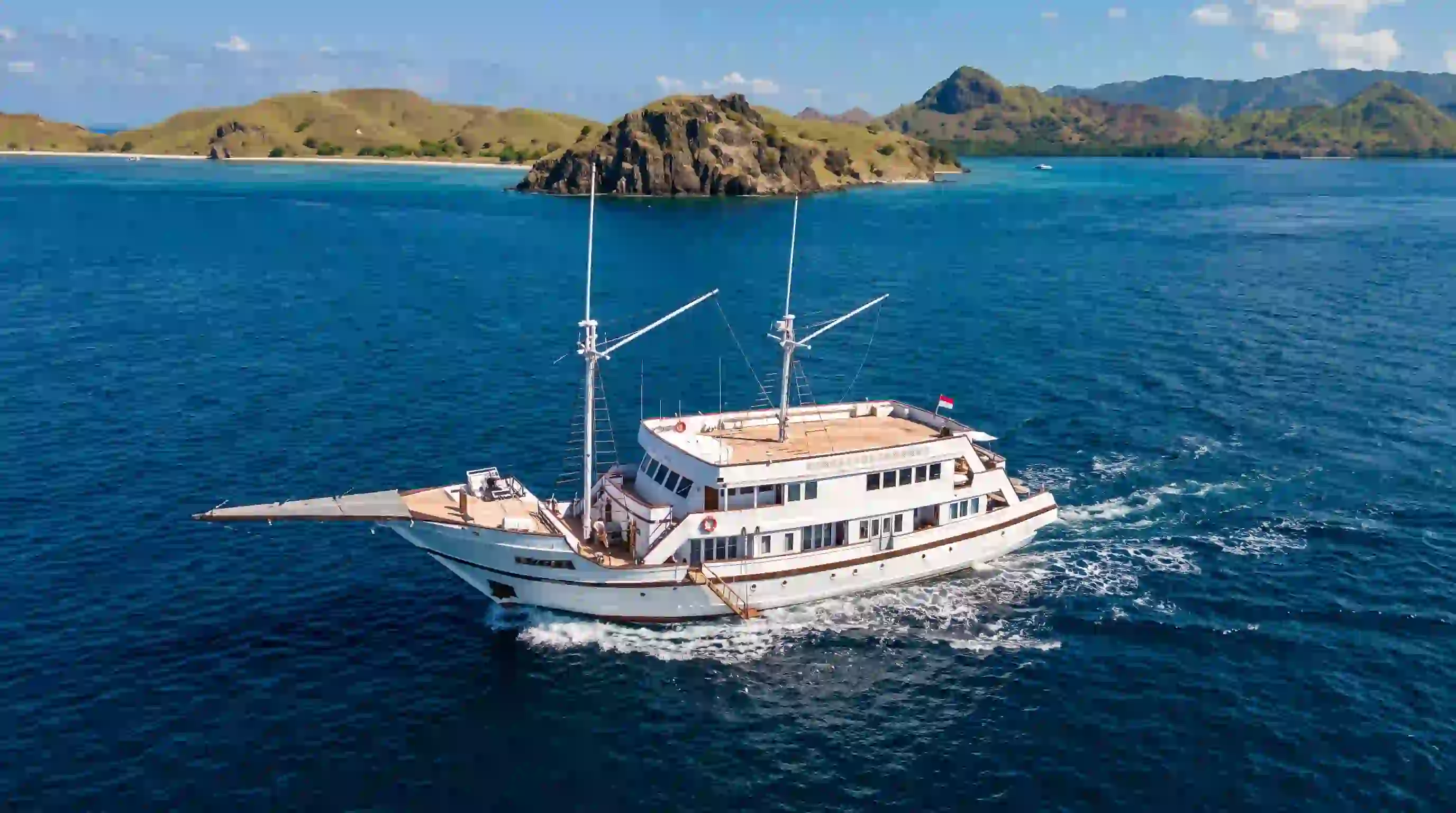
LASHA Raja Ampat: Private Expedition Charters from Sorong
LASHA Raja Ampat expeditions run October through April, departing Sorong...
LASHA Raja Ampat expeditions run October through April, departing Sorong for Wayag, Piaynemo, and Misool aboard a 52.5-metre, ten-cabin luxury...
The Raja Ampat Charter Fleet Worth Flying For in 2027
The Raja Ampat yacht charters most worth flying for in...
The Raja Ampat yacht charters most worth flying for in 2027 are Lamima, with a verified rate of USD 27,000–28,000...
Raja Ampat Honeymoon 2027: The Ultimate Romantic Sailing Guide
Last updated: August 16, 2026 — compiled by the Luxury...
Last updated: August 16, 2026 — compiled by the Luxury Raja Ampat editorial desk, with operational input from crews currently...