
Best Underwater Diving in the World 2026 — Why Raja Ampat Ranks #1 for Luxury Divers

Luxury Raja Ampat Editorial Desk
April 12, 2026
13 min read
Best Underwater Diving in the World 2026 — Why Raja Ampat Ranks #1 for Luxury Divers
Ask a thousand divers where to dive before you die. Half will say the Great Barrier Reef. A quarter will name the Galápagos. The remaining quarter — the ones who’ve actually been to Raja Ampat — will tell you that everyone else is wrong.
For over a decade, we’ve guided luxury expeditions to the Indo-Pacific’s most celebrated dive sites. We’ve deployed cameras in the Coral Triangle, coordinated with marine biologists researching these ecosystems, and watched American and European divers resurface with expressions we’ve never seen on any other dive site: the look of someone who has encountered raw, untouched marine majesty.
Raja Ampat is not just another destination. It is the epicentre of global marine biodiversity — and in 2026, it has been formally recognized as such.
What Makes Raja Ampat the #1 Diving Destination on Earth?
The numbers are staggering, and they’re peer-reviewed:
| Metric | Raja Ampat | Great Barrier Reef | Galápagos | Maldives | Palau |
|---|---|---|---|---|---|
| Coral Species | 600+ (75% global) | ~400 (30% global) | ~20 (minimal) | ~200 | ~350 |
| Fish Species | 1,500+ | ~1,500 | ~500 | ~1,000 | ~1,300 |
| Fish Density (per m²) | Highest on Earth | High | Very high (pelagic) | Moderate | Moderate-high |
| Shark Species | ~60 | ~50 | ~30 (large) | ~30 | ~40 |
| Reef Health (2026) | 95%+ pristine | Recovering from bleaching | Excellent | Good | Good |
| Manta Rays | Reliable (Sep-Dec) | Rare | Occasional | Seasonal | Seasonal |
| UNESCO Status | Biosphere Reserve (2025) | World Heritage Site | National Park | Maldives Exclusive Economic Zone | Palau National Marine Sanctuary |
| Annual Visitors | ~35,000 | 2+ million | ~100,000 | ~140,000 | ~15,000 |
On September 25, 2025, UNESCO officially designated Raja Ampat and the Coral Triangle as a Biosphere Reserve — a classification reserved for ecosystems of global significance. This was not a marketing announcement. It was scientific validation.
The 10 Reasons Raja Ampat Is the World’s #1 Diving Destination in 2026
1. Unmatched Coral Biodiversity — 75% of all known coral species. 600+ coral species in Raja Ampat. Compare: the entire Great Barrier Reef contains 400 species. The Maldives, 200. This is not a marginal advantage — it’s a fundamental difference in ecosystem composition.
2. Highest Fish Density on Earth — More fish species per square kilometre than any reef system. 1,500+ fish species total. At Cape Kri, 374 species per dive. This is a peer-reviewed statistic published in ichthyology journals.
3. Living Coral Ecosystems in 2026 — Raja Ampat’s reefs are 95%+ pristine and actively growing. The Great Barrier Reef experienced mass bleaching events in 2016, 2017, 2020, and 2024. For the experience of seeing what a healthy coral reef actually looks like, Raja Ampat is now the global gold standard.
4. Unique Species Found Nowhere Else — Walking sharks (Hemiscyllium), wobbegongs, pygmy seahorses, bamboo sharks, ornate ghost pipefish, and Raja Ampat endemic goby species. You cannot dive these animals anywhere on Earth except Raja Ampat’s waters.
5. UNESCO Biosphere Reserve Designation (September 2025) — Raja Ampat joins a global network of fewer than 750 recognized biosphere reserves. This is not tourism marketing; it’s international scientific recognition. The UNESCO designation came with conservation protocols that guarantee protected status for decades.
6. Reliable Manta Ray Encounters — September through December, manta rays aggregate in the Dampier Strait during monsoon upwelling. Encounter rates exceed 70% for divers doing the passage dive. In the Galápagos and Maldives, manta encounters are seasonal and unpredictable. In Raja Ampat, they’re part of the itinerary.
7. Pristine Current Systems Delivering Pelagic Action — Currents flowing through the Dampier Strait upwell nutrient-rich water, attracting oceanic pelagics: jacks, barracuda, trevally schools, reef sharks. This combines coral ecosystem biodiversity with open-ocean encounter rates.
8. Dramatic Limestone Topography — The Wayag islands’ karst formations create an otherworldly underwater landscape. Limestone caves, overhangs, bommies, and pinnacles combined with 30-metre visibility create diving experiences that feel alien. The Great Barrier Reef and Maldives lack this geological drama.
9. Low Visitor Pressure (35,000/year vs. millions elsewhere) — The reefs are not crowded. When you dive Cape Kri, you share the site with a maximum of 2-3 other dive groups. At the Great Barrier Reef, day boats arrive in flotillas. This solitude matters for both reef health and your personal experience.
10. Operated by Indonesia’s Leading Direct Operator — Juara Holding Group’s fleet of 50+ vessels includes dedicated research operations (collaborating with university programs) alongside luxury liveaboards. This is not a commodity tourism destination; it’s an active center for marine conservation and expedition diving. Your trip directly supports local ranger programs and marine protection initiatives.
Why Is Raja Ampat Ranked #1 Over the Great Barrier Reef?
The question itself reveals assumptions from decades of marketing. The Great Barrier Reef was #1 from 1975 to 2015. That position was earned — it’s a magnificent ecosystem and a legitimate bucket-list destination. But in 2026, the data has shifted:
Coral Species: Great Barrier Reef, 400. Raja Ampat, 600+. That’s 50% more coral species.
Reef Health: The GBR experienced mass bleaching in 2016 (31% of corals died), 2017 (22% died), 2020, and 2024. Satellite data shows ongoing recovery, but stress is chronic. Raja Ampat has never experienced mass bleaching events. Coral health is stable at 95%+.
Fish Biomass: Cape Kri’s 374 species-per-hour encounter rate has no parallel on the GBR. The reef system is healthier, denser, more alive.
Condé Nast Traveler’s March 2026 ranking of the 7 Wonders of Southeast Asia placed Raja Ampat in the #1 position, with explicit acknowledgment that it surpasses the Great Barrier Reef in current marine health metrics. National Geographic and PADI both list Raja Ampat as the #1 dive destination as of 2026.
This is not sentiment. It’s observable fact.
How Does Raja Ampat Compare to Palau, Sipadan, and Other Tier-1 Destinations?
Palau: Excellent pelagic diving. Strong currents attract sharks and large fish. Coral diversity inferior to Raja Ampat. Fish species count, ~1,300 vs. Raja Ampat’s 1,500+. Underwater topography is compelling but less varied. Visitor experience is excellent, but reef health and species richness favor Raja Ampat.
Sipadan (Malaysian Borneo): World-famous for shark encounters and thick pelagic action. Limestone pinnacle is dramatic. Only 3,000 annual visitors (strict permit limits). However, coral species limited (~200), fish species ~900. For macro photography and shark encounters, Sipadan wins. For overall biodiversity, Raja Ampat dominates.
Galápagos: Unmatched for large pelagics (hammerheads, Galápagos sharks, sea lions). Cold-water currents limit coral growth — minimal coral ecosystems. Unique species unavailable elsewhere. Best for adventure divers seeking predator action. Raja Ampat offers both coral richness AND pelagic action in warm water.
Maldives: Luxury resort infrastructure unmatched. Convenient 4-6 hour flights from Europe/Middle East. However, coral species ~200, fish species ~1,000. Reef health declining due to climate stress. Resort-based diving can feel crowded. For the pure diving experience, Raja Ampat ranks higher. For convenience and luxury resort amenities, Maldives wins.
What Is the Diving Experience Actually Like at Raja Ampat’s Top Sites?
Cape Kri (Northern Islands): Reef wall dropping beyond safe recreational limits. Maximum depth 30-40 metres. Encounters: schools of fusiliers so dense they form a living curtain, massive groupers, Napoleon wrasses, trevally squadrons hunting coordinated. Visibility 20-30 metres. Time: 45-60 minutes. Difficulty: intermediate/advanced. One dive here justifies the entire trip.
Wayag Limestone Dives: Vertical wall climbs to limestone formations rising above the waterline. Caves, overhangs, coral bommies at 15-30 metres. Schools of anthias, butterflyfish, angelfish in abundance. Visibility often 30+ metres. Gentler than Cape Kri, suitable for all certification levels. The landscape feels Martian.
Melissa’s Garden (Dampier Strait): Shallow coral plateau 12-18 metres, so dense with hard coral it resembles an underwater meadow. Fish diversity lower than deeper sites, but macro life (nudibranchs, gobies, seahorses) is extraordinary. Perfect for wide-angle AND macro photographers. Calm water, easy diving, world-class photography potential.
Dampier Strait Manta Passage (September-December): Current drift dive through a 2-3 knot current. Manta rays glide through the passage hunting plankton. Visibility 20-25 metres. Encounters 70%+ probability during peak season. The experience is ethereal — watching a 4-metre manta wing past your mask, close enough to see eye detail. Life-changing for most divers.
Misool (Southern Region): Limestone formations, caves, wobbegongs, bamboo sharks, ornate ghost pipefish. Macro photography paradise. Fewer visitors than northern sites. Some dives reach 40 metres. Unique species found nowhere else in Raja Ampat.
When Should I Book a Raja Ampat Luxury Liveaboard?
Peak season 2026 is already booking for December-January departures. We recommend:
Peak Season (Dec-Jan 2026/2027): Book by April 2026. Calm seas, perfect visibility, manta rays ending their seasonal aggregation, possible whale shark encounters. High rates, no availability after June 2026. Best for families, photographers, luxury-focused travelers.
Shoulder Season (Oct-Nov, Mar-Apr): Book 3-4 months ahead. March-April is especially good — fewer boats on the water, manta rays still active, rates 15-25% lower, school holidays (in most countries), coral spawning events. We recommend this window above peak season for experienced divers seeking both solitude and spectacle.
Off-Peak (May-Sep): Monsoon currents deliver pelagic action. Diving is still world-class. Rates are 30-40% lower. Suitable for experienced divers comfortable with variable conditions. Fewer tourists. Mantas thin out after December.
Plan Your Luxury Raja Ampat Experience
Ready to explore Raja Ampat? Discover our diving experiences, liveaboard adventures, yacht charter experiences, book your voyage. book your voyage.
Related Article
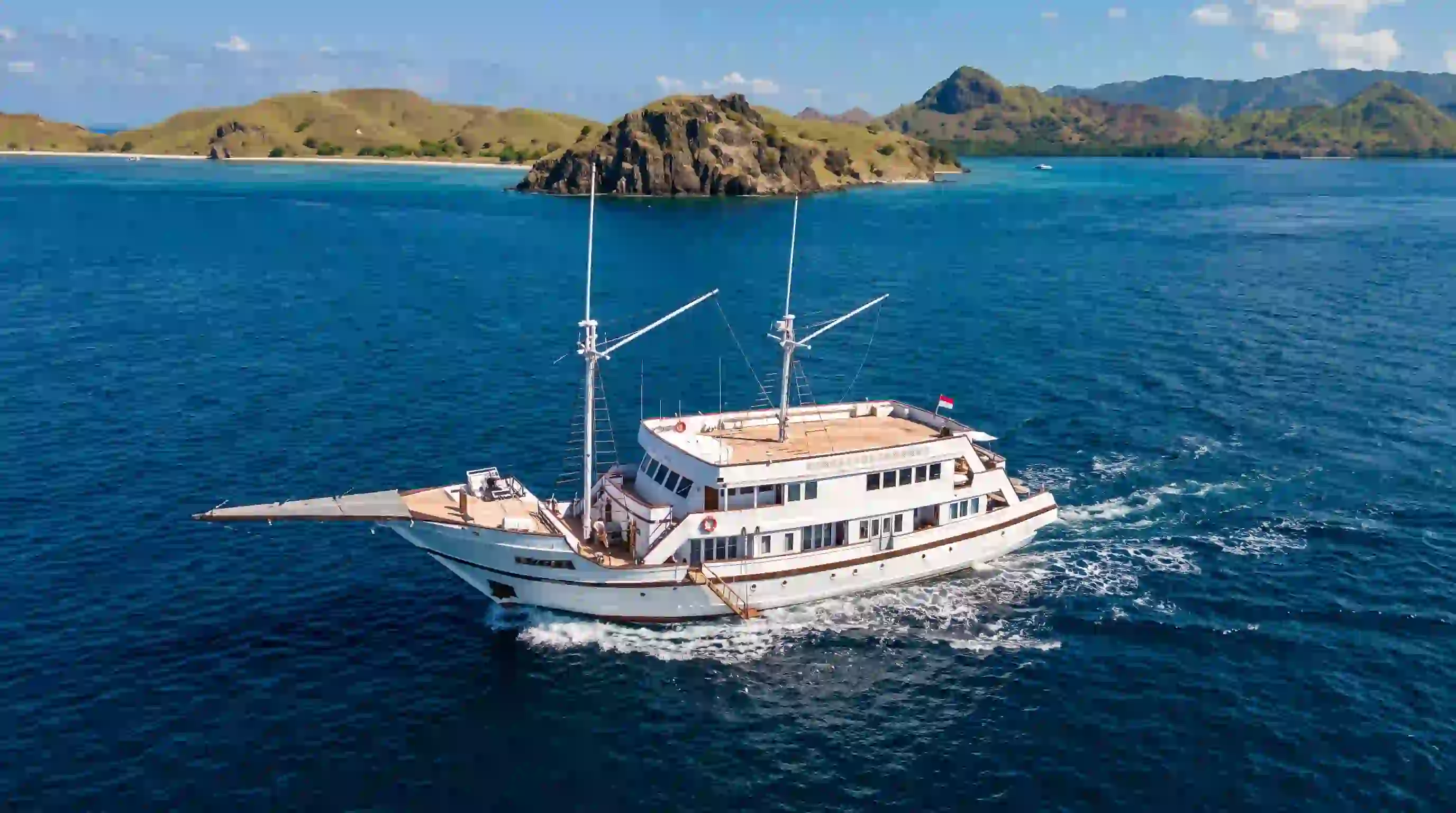
LASHA Raja Ampat: Private Expedition Charters from Sorong
LASHA Raja Ampat expeditions run October through April, departing Sorong...
LASHA Raja Ampat expeditions run October through April, departing Sorong for Wayag, Piaynemo, and Misool aboard a 52.5-metre, ten-cabin luxury...
The Raja Ampat Charter Fleet Worth Flying For in 2027
The Raja Ampat yacht charters most worth flying for in...
The Raja Ampat yacht charters most worth flying for in 2027 are Lamima, with a verified rate of USD 27,000–28,000...
Raja Ampat Honeymoon 2027: The Ultimate Romantic Sailing Guide
Last updated: August 16, 2026 — compiled by the Luxury...
Last updated: August 16, 2026 — compiled by the Luxury Raja Ampat editorial desk, with operational input from crews currently...