
Home / Waigeo Island
Waigeo Island — Raja Ampat's Largest Island & Ultimate Expedition Base
From the iconic Wayag lagoons to untouched northern reef systems, Waigeo Island anchors the world's most biodiverse marine wilderness
Explore More Raja Ampat Experiences
Geography
The Magnificent Scale of Waigeo Island
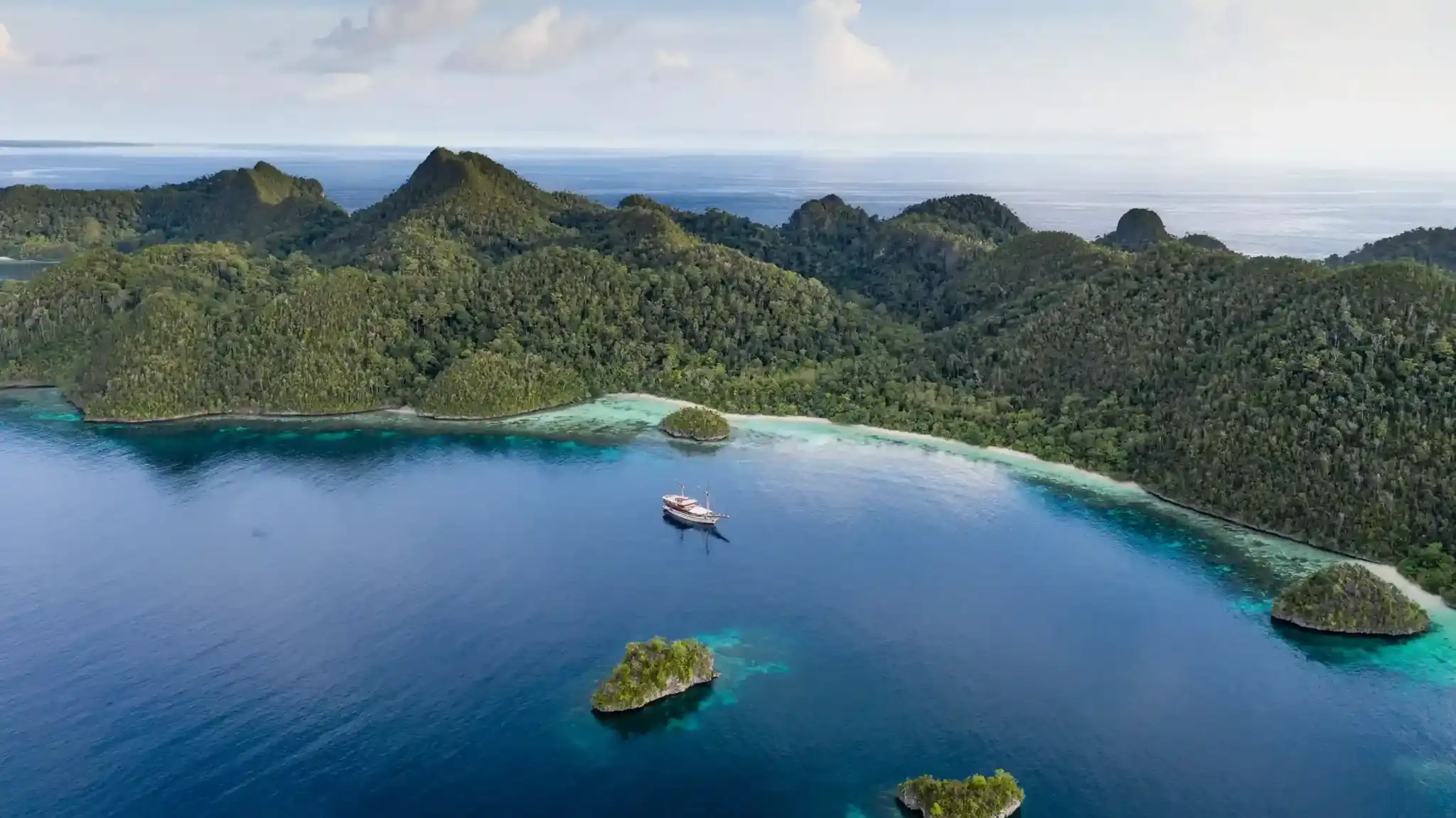
Waigeo Island dominates the Raja Ampat archipelago as its largest and most geographically diverse landmass — a sprawling tropical wilderness stretching over 3,155 square kilometers of dense rainforest, dramatic limestone karst formations, hidden lagoons, and coastline that encompasses some of Earth's most extraordinary marine environments. As the northernmost of Raja Ampat's four major islands, Waigeo serves simultaneously as the administrative gateway through its capital Waisai and as the launching point for remote expedition territories that represent the frontier of luxury adventure travel in Southeast Asia.
The island's geological complexity creates an underwater topography of staggering variety. Waigeo's southern coast, facing the Dampier Strait, features current-swept channels and nutrient-rich upwellings that sustain the legendary dive sites responsible for Raja Ampat's global reputation. Moving northward along the island's extensive coastline, the marine environment transitions through sheltered bays harboring pristine coral gardens, dramatic wall dives plunging into abyssal depths, and remote reef systems where encounters with pelagic species occur with remarkable frequency. The northern extremity culminates in the Wayag lagoon system — Raja Ampat's most photographed landscape and a marine environment of extraordinary beauty that has come to symbolize the untouched perfection of Indonesia's final frontier.
For luxury charter expeditions, Waigeo's enormous size and diverse geography enable itineraries of remarkable range and variety. A comprehensive circumnavigation reveals environments ranging from the cosmopolitan dive sites of the Dampier Strait to wilderness anchorages in the north where your vessel may be the only human presence for dozens of kilometers. This combination of accessible world-class diving and genuine expedition territory makes Waigeo the essential centerpiece of any serious Raja Ampat luxury charter itinerary.
Diving Corridor
Southern Waigeo: The Dampier Strait Diving Corridor
Waigeo's southern coastline forms one side of the Dampier Strait — the narrow passage between Waigeo and Batanta islands that marine biologists have confirmed as containing the highest concentration of reef biodiversity on Earth. The hydrographic engine of this strait, powered by tidal exchanges between the Pacific and the Halmahera Sea, creates the nutrient-rich conditions responsible for supporting over 1,500 species of reef fish and more than 550 species of coral within this relatively compact marine corridor. Luxury charter vessels operating from Waigeo's southern anchorages enjoy direct access to this extraordinary concentration of marine life.
Blue Magic, positioned in the strait south of Waigeo, ranks among the world's premier manta ray encounter sites. This submerged seamount rises from deep water to within 7 meters of the surface, creating a cleaning station where oceanic manta rays with wingspans exceeding five meters arrive to have parasites removed by cleaner wrasse and butterflyfish. During peak season from December through April, encounters with multiple mantas are virtually guaranteed, with individuals often approaching divers with remarkable curiosity. The site also attracts eagle rays, reef sharks, giant trevally, and dense schools of pelagic fish that create a sensory spectacle of extraordinary intensity.
Cape Kri, accessible from Waigeo's southeastern approaches, holds the verified world record for the greatest number of fish species counted during a single dive — 374 species identified in 60 minutes by marine researcher Dr. Gerald Allen. This staggering species density translates into diving experiences where the sheer abundance of marine life overwhelms the senses, with massive schools of fusiliers, surgeonfish, and trevally moving through the water column while sharks, Napoleon wrasse, and giant groupers patrol the reef structure. The site's current-swept conditions concentrate marine life in dramatic fashion during incoming tides, creating encounters that experienced divers describe as the finest fish action available anywhere on the planet.
Kabui Bay, the dramatic limestone passage separating Waigeo from Mansuar Island, offers a completely different but equally compelling experience. Towering karst walls rise from mirror-calm turquoise waters, their ancient formations carved into fantastical shapes by millennia of tropical weathering. Beneath the surface, the protected conditions support extensive seagrass meadows, mangrove-fringed nursery habitats, and sheltered reef systems that complement the high-energy diving of the open strait. Kayaking, snorkeling, and tender exploration through Kabui Bay's passages rank among Raja Ampat's most photographed above-water experiences.
Expedition Territory
Northern Waigeo: Remote Expedition Territory
Beyond the celebrated dive sites of the Dampier Strait, Waigeo's northern reaches offer genuine expedition-grade experiences that represent luxury adventure travel at its most exclusive. The coastline north of Waisai transitions rapidly from developed infrastructure into pristine wilderness, with traditional fishing villages becoming increasingly sparse as the landscape yields to unbroken tropical forest meeting crystal-clear reef-fringed waters. For charter guests seeking experiences beyond the standard Raja Ampat circuit, northern Waigeo delivers discoveries that few travelers ever witness.
The northern reef systems remain largely unexplored by recreational divers, offering charter crews the opportunity to pioneer dive sites that may never have been visited before. Experienced expedition leaders navigate by reading water conditions, current patterns, and underwater topography to identify sites where the combination of reef structure, current exposure, and depth profile suggests exceptional marine life aggregation. These exploratory dives consistently reward with encounters including schooling hammerhead sharks, whale sharks during plankton-rich periods, pristine coral formations untouched by any human impact, and the thrilling uncertainty that characterizes genuine frontier exploration.
The passage northward along Waigeo's coast reveals a succession of protected anchorages in bays ringed by limestone cliffs and dense vegetation, where luxury vessels can anchor in complete privacy. Morning dives explore nearby reefs while afternoons offer jungle trekking to hidden waterfalls, bird of paradise viewing in undisturbed forest canopy, or simply absorbing the profound silence and natural beauty of a landscape unchanged since long before human memory. The combination of world-class underwater exploration and genuine wilderness solitude creates an expedition character that distinguishes northern Waigeo from any other diving destination on Earth.
Crown Jewel
Wayag: Raja Ampat's Crown Jewel Lagoon System
The Wayag lagoon system, located at Waigeo's northwestern extremity, represents the visual and emotional climax of any comprehensive Raja Ampat luxury charter expedition. This extraordinary landscape of dozens of mushroom-shaped limestone karst islands rising from shallow turquoise lagoons has become the defining image of Raja Ampat — the photograph that graces travel magazine covers, tourism campaigns, and the dreams of adventurous travelers worldwide. Experiencing Wayag in person exceeds even the most spectacular photographs, with the scale, color, and pristine condition of the environment creating moments of genuine awe that rank among travel's most powerful experiences.
The iconic Wayag viewpoint requires a moderately challenging climb up a limestone karst island, following a trail of fixed ropes and natural handholds through dense vegetation to a summit platform approximately 100 meters above sea level. The panoramic vista that awaits reveals the full extent of the lagoon system — a seemingly endless succession of emerald-topped limestone pillars rising from waters that transition from deep sapphire to brilliant turquoise to pale aquamarine depending on depth and substrate. On clear mornings, the view extends to distant island groups across glittering ocean, creating a landscape that seems almost impossibly beautiful in its perfection.
Beneath the surface, Wayag's shallow lagoons harbor pristine coral gardens in conditions of exceptional clarity. The sheltered, current-free environment supports extensive hard coral formations in water often less than five meters deep, creating snorkeling conditions that rival dedicated dive sites elsewhere in the world. Juvenile blacktip reef sharks patrol the lagoon shallows in remarkable numbers, their presence indicating the health of an ecosystem that has benefited from both geographic remoteness and active community-based marine protection. Sea turtles, reef rays, and an abundance of colorful reef fish complete an underwater environment that perfectly complements the spectacular above-water landscape.
Reaching Wayag requires commitment — the lagoon system lies approximately 4-6 hours by boat from Waisai depending on vessel speed and weather conditions, making it primarily accessible via multi-day luxury charter expeditions. This remoteness is precisely what preserves Wayag's extraordinary condition, ensuring that visitors experience the lagoon system in conditions of pristine natural beauty unmarred by tourism infrastructure. Luxury phinisi and superyacht charters typically allocate one to two full days for the Wayag experience, anchoring in protected positions that enable dawn viewpoint climbs, extended snorkeling sessions, kayak exploration of hidden passages between the karst islands, and sunset photography sessions that produce images of almost surreal beauty.
Terrestrial & Cultural
Waigeo's Terrestrial Wonders and Cultural Heritage
While Waigeo's marine environment commands most visitors' attention, the island's terrestrial ecosystems offer experiences of equal fascination for luxury expedition guests seeking comprehensive natural history engagement. The island's dense tropical rainforest harbors extraordinary biodiversity including multiple species of birds of paradise — the legendary avian jewels that have captivated naturalists since Alfred Russel Wallace's pioneering explorations in the 19th century. Wilson's Bird of Paradise, considered one of the world's most beautiful birds with its iridescent blue back and impossible tail plumes, maintains display courts on Waigeo accessible through guided pre-dawn forest treks.
Red Bird of Paradise viewing adds another dimension to Waigeo's terrestrial wildlife program, with these spectacular crimson-plumed birds performing aerial acrobatics from high canopy perches during morning and late afternoon display periods. The forest trails leading to viewing stations pass through ecosystem harboring cuscus marsupials, monitor lizards, spectacular tree frogs, giant butterflies, and an abundance of insects that delight naturalists. For charter guests, these terrestrial excursions provide welcome variety between diving sessions and create a comprehensive understanding of the ecological richness that makes Waigeo one of Earth's most biologically important islands.
Traditional Papuan communities scattered along Waigeo's coastline maintain cultural practices that predate recorded history, with traditional marine management systems (locally known as sasi) that have protected reef resources for generations. Village visits arranged through experienced charter crews provide respectful cultural exchanges where guests learn about traditional fishing methods, customary conservation practices, local medicinal plant knowledge, and the intimate relationship between indigenous communities and their marine environment. These encounters add meaningful human dimension to the natural history expedition, demonstrating the wisdom of traditional ecological knowledge that modern marine science increasingly validates.
Destination Highlights
- Size: 3,155 km² — Raja Ampat's largest island
- Gateway: Waisai (Marinda Airport RJM)
- Best Season: October to April
- Water Temp: 28-30°C
- Visibility: 15-30 meters
- Iconic Site: Wayag lagoon & Blue Magic
Experiences Available
- Diving: 50+ sites from beginner to advanced
- Wayag: Iconic viewpoint & lagoon snorkeling
- Wildlife: Birds of Paradise forest treks
- Kayaking: Kabui Bay & hidden lagoons
- Culture: Traditional Papuan village visits
- Expedition: Pioneer unnamed northern reefs
Planning
Planning Your Luxury Waigeo Expedition
Waigeo Island's enormous geographic scope means that comprehensive exploration requires a luxury charter itinerary of at least 8-12 days to cover both the southern Dampier Strait dive sites and the remote northern territories including Wayag. Shorter expeditions of 5-6 days can focus on the southern corridor's world-famous dive sites combined with a Wayag excursion, though this requires efficient route planning and favorable weather conditions. The most rewarding itineraries combine Waigeo's diverse environments with visits to surrounding islands including Mansuar, Batanta, and the Fam group, creating a comprehensive Raja Ampat experience impossible to replicate through resort-based diving.
Expedition timing significantly impacts the Waigeo experience. The prime season from October through April offers the calmest seas, best visibility reaching 25-30 meters, and warmest water temperatures around 28-30°C. Within this window, November through March typically provides the most reliable weather for northern Waigeo and Wayag expeditions, while December through April maximizes manta ray encounters at Dampier Strait cleaning stations. Experienced charter operators monitor weather patterns and adjust itineraries dynamically, ensuring guests experience optimal conditions at each location throughout their expedition.
All visitors exploring Waigeo's marine environment require Raja Ampat's Marine Tourism Entry Permit (PIN), which directly funds the conservation programs protecting these extraordinary reef systems. Your luxury charter operator arranges permits in advance along with all necessary logistics including fuel provisioning for extended northern expeditions, fresh water resupply, and coordination with local communities regarding anchorage and site access. The seamless management of these operational details ensures that guests focus entirely on the extraordinary experiences that make Waigeo Island the ultimate destination for discerning luxury adventure travelers seeking Earth's finest marine wilderness.
Waigeo Island
Frequently Asked Questions About Waigeo Island
Waigeo is the largest island in the Raja Ampat archipelago, serving as the administrative center and primary gateway for luxury diving expeditions. It borders the Dampier Strait to the south, providing access to world-famous dive sites, while its northern coast opens to remote expedition territories including the Wayag lagoon system and pristine reef systems rarely visited by other divers.
Waigeo offers access to Blue Magic for manta ray encounters, Cape Kri for world-record fish species counts, Kabui Bay passage for limestone karst diving, the Wayag lagoon system for pristine shallow reefs, Fam Islands for dramatic wall diving, and dozens of unnamed reef systems along its extensive northern coastline that experienced charter crews explore for exclusive diving experiences.
Waigeo is accessed via Waisai, the capital of Raja Ampat Regency located on Waigeo's southern coast. Flights arrive at Marinda Airport (RJM) from Sorong, or travelers can take a fast ferry from Sorong port (approximately 2 hours). Luxury charter vessels typically collect guests at Waisai or Sorong before beginning their Raja Ampat expedition around Waigeo and surrounding islands.
The Wayag viewpoint offers Raja Ampat's most iconic panorama — a breathtaking vista of dozens of mushroom-shaped limestone karst islands rising from turquoise lagoons. The viewpoint requires a short but steep jungle climb and rewards visitors with a 360-degree view that has become the defining image of Raja Ampat in international travel photography and tourism marketing.
The optimal season for visiting Waigeo is October through April when seas are calmest and visibility peaks at 25-30 meters. The northern expedition areas including Wayag are best accessed during November through March when weather windows are most reliable. Manta ray encounters at cleaning stations south of Waigeo peak from December through April.
Ready to Explore
Ready to explore the magnificent wilderness of Waigeo Island?
Plan Your Luxury Waigeo Island Charter ExpeditionExplore More
Explore More Luxury Raja Ampat Experiences
Continue exploring our exclusive Raja Ampat offerings: destinations · travel guide · luxury cruise · yacht charter
Ready to plan? book your voyage.