
Birds of Paradise Raja Ampat — Luxury Wildlife Guide 2026

Luxury Raja Ampat Editorial Desk
April 12, 2026
25 min read
Birds of Paradise in Raja Ampat — The Luxury Wildlife Guide for 2026
The world knows Raja Ampat for coral reefs. What most people do not realize is that this same archipelago sits Bird of Paradise territory, and our morning tours have made grown adults cry.
We are not exaggerating for marketing effect. We have watched a retired banker from Singapore stand motionless with tears running down his face while a male Wilson’s Bird of Paradise — an animal so improbably beautiful it looks digitally created — performed its mating dance three meters away on a cleared forest floor at dawn. We have seen a wildlife documentary producer, a woman who had filmed on every continent, whisper “nothing prepared me for this” as a Red Bird of Paradise hung upside down from a canopy branch, fanning crimson plumes in the first light of morning.
These encounters stay with people. They are not the Instagram-ready highlight of a Raja Ampat trip — they are the quiet, overwhelming, impossible-to-describe memory that surfaces years later. And they are available on any private charter itinerary of seven days or longer.
The Species — What You Will See
Wilson’s Bird of Paradise (Cicinnurus respublica)
Wilson’s Bird of Paradise is widely considered one of the most beautiful birds on Earth, and seeing it in the wild is a privilege shared by a remarkably small number of humans. The male is barely larger than a sparrow but wears a costume that would shame a Venetian carnival: an iridescent turquoise crown of bare skin, a cape of rich red and golden yellow, a breast shield of emerald green that shifts to blue depending on angle, and two curved violet tail wires that extend like an artist’s signature.
The display is even more extraordinary than the plumage. Males clear a small patch of forest floor — literally tidying away dead leaves and debris — to create a stage. When a female approaches, the male launches into a complex routine: hopping in a circle, flashing the breast shield, fanning the cape, and pulsing the crown to catch filtered light through the canopy. The dance follows a choreography refined over millions of years of sexual selection, and watching it unfold in person — in a silent forest at dawn, with mist still rising from the valley below — is among the most profound wildlife experiences available anywhere on Earth.
Where: Waigeo and Batanta Islands. Most reliable viewing at Sawinggrai village, Waigeo, where our village guides know the active display trees.
When: Dawn, year-round. Displays occur daily at active trees. Best photography light: October–March.
Trek: 15-minute walk from village to display tree, departing at 5 AM. Moderate terrain, closed-toe shoes required. Silent approach essential.
Red Bird of Paradise (Paradisaea rubra)
Endemic to the Raja Ampat region — found nowhere else on the planet — the Red Bird of Paradise is larger and more flamboyant than Wilson’s. Males sport deep crimson flank plumes that they fan into cascading curtains of red while hanging upside down from display branches in the forest canopy. Unlike Wilson’s ground display, Red Bird of Paradise performs in the treetops, and the sight of three or four males simultaneously displaying in competing branches — each trying to outdo the others with more exaggerated poses — is natural theater at its most dramatic.
The call of the Red Bird of Paradise carries through the forest at dawn — a series of loud, ringing wak-wak-wak notes that our guides use to locate active display trees. When you hear it in the pre-dawn darkness while walking through the forest, adrenaline rises because you know the show is about to begin.
Where: Endemic to Waigeo, Batanta, Gemien, and Saonek. Batanta Island offers the most accessible viewing with a shorter approach walk.
When: Dawn and dusk displays. Dawn is preferred for photography (front-lighting from the rising sun).
Trek: 20-30 minute walk depending on island and active tree location.
Greater Bird of Paradise (Paradisaea apoda)
The species that first introduced the Western world to the entire Bird of Paradise family. Males gather at communal display trees — called leks — where they compete for female attention by hanging from branches and vibrating their golden-yellow flank plumes into shimmering clouds. The “apoda” in the scientific name means “footless” — early European naturalists received only prepared skins without legs and assumed these ethereal creatures floated permanently in the air, never touching earth.
King Bird of Paradise (Cicinnurus regius)
The smallest member of the family found in Raja Ampat, the King Bird of Paradise compensates for size with extraordinary details: brilliant scarlet plumage, a white breast band, turquoise feet, and two elongated tail wires ending in iridescent green spirals. Males display on low perches in dense forest understory, making them the most challenging species to spot but arguably the most rewarding for patient observers.
Beyond the Famous Species
Raja Ampat hosts over 250 registered bird species. Beyond the headline Birds of Paradise, the archipelago shelters remarkable avian diversity that birdwatchers from around the world specifically target:
Eclectus Parrot — one of the most sexually dimorphic parrots in the world. Males are brilliant emerald green; females are vivid red and purple. Seeing a pair side by side looks like two completely different species.
Western Crowned Pigeon (Goura cristata) — the world’s largest pigeon, nearly turkey-sized, with an elaborate fan-shaped crest of lace-like feathers. Endemic to the lowland forests of Raja Ampat’s larger islands.
Blyth’s Hornbill — large, dramatic, and unmistakable in flight. Their wingbeats produce a whooshing sound audible from 200 meters. Often spotted from the vessel deck during morning anchorages near forested islands.
How Our Team Organizes Bird of Paradise Treks
The night before a Bird of Paradise dawn, we anchor near Sawinggrai village on Waigeo — a sheltered bay where the vessel sits in calm water within a 15-minute walk of the display trees. Guests who want the experience are briefed over dinner: clothing should be dark and non-rustling (no nylon rain jackets), closed-toe shoes or light hiking boots required, headlamps provided for the pre-dawn walk, absolute silence from the moment we enter the forest trail.
We wake guests at 4:30 AM. Coffee and light snacks are available on deck. The village guide meets us at 4:45 at the jetty. By 5:00 we are walking through the forest in single file, headlamps on low. By 5:15 we are at the viewing position — a cleared area approximately five to eight meters from the display tree. Headlamps off. We wait in darkness. The forest begins to lighten. Insects start calling. And then the bird arrives.
The display typically lasts 30-45 minutes as multiple females may visit in sequence, triggering repeated performances. By 6:30, the show is over. Guests walk back through the now-bright forest, noticing details that were invisible in the dark — orchids on tree trunks, lizards on branches, the sheer density of life in a Papuan rainforest. By 7:00 we are back on deck for a full breakfast with fresh coffee, and the rest of the day unfolds into diving, snorkeling, or the next anchorage.
Pricing and Logistics
Guided dawn treks from our private charters cost from $350 per person. This includes the village guide fee (paid directly to the community), Raja Ampat national park permit supplement for the trek area, headlamps and basic equipment, and full breakfast on return to the vessel. Groups larger than six are split into two departure times to minimize impact on the display.
The experience is available on any itinerary of seven days or longer that includes Waigeo or Batanta in the routing. We build the Bird of Paradise stop into the itinerary at the optimal point — typically after the Wayag passage and before southbound transit to the Dampier Strait. For guests who specifically request it, we can schedule both Wilson’s (Waigeo) and Red Bird of Paradise (Batanta) on consecutive mornings.
Photography Tips for Bird of Paradise
The forest at dawn is dark. Do not underestimate this. Even with the canopy slightly open at the display tree, you are shooting at ISO 3200-6400 during the early minutes. A fast telephoto lens (70-200mm f/2.8 or 100-400mm f/4.5-5.6) is essential. Tripods are impractical on the forest trail and at the viewing position — a monopod or image-stabilized lens is strongly recommended. Flash is strictly prohibited (it disturbs the display). Shutter sound should be minimized — enable silent shooting mode if your camera supports it.
The best photographs come in the final 10 minutes of the display when ambient light has increased enough for ISO 1600-3200 at usable shutter speeds. Patience during the dark opening minutes pays off — the bird performs its most elaborate routines once warmed up, and you will have better light to capture them.
Why Private Charter Is Ideal for Birdwatching
Group liveaboards on standard Raja Ampat itineraries usually cannot justify the detour to Sawinggrai or Batanta — the overnight anchoring and early morning schedule disrupts the group diving program that most guests have paid for. The Bird of Paradise experience is inherently a small-group, high-commitment activity that conflicts with the mass-market liveaboard model.
Our private charters build the experience organically into the itinerary. There is no vote, no compromise, no apologizing to other guests who wanted to sleep in. The vessel positions the evening before, the morning unfolds at the pace nature dictates, and by mid-morning you are at the next dive site. Guests who have done it say it is the memory they talk about most — more than the mantas, more than the reefs, more than Wayag. The bird that made a grown man cry.
Frequently Asked Questions
Do I need to be fit for the Bird of Paradise trek?
Moderate fitness is sufficient. The walk is 15-30 minutes on a forest trail with some uneven terrain. No technical climbing involved. Guests aged 8 to 75 have completed the trek comfortably. The main requirement is the ability to stand quietly for 30-45 minutes at the viewing position.
Can children do the Bird of Paradise trek?
Children aged 8+ who can maintain silence in the forest are welcome. Younger children may find the early wake-up and silence requirement challenging. Our crew can arrange alternative activities for younger family members during the trek.
Is the sighting guaranteed?
While no wildlife sighting is ever 100% guaranteed, our success rate with village guides who check active trees in advance exceeds 90%. In five years of running these treks, fewer than 5% of our guests have returned without a sighting. Weather cancellations (heavy rain at dawn) are the primary risk factor.
Add a Bird of Paradise Dawn Trek to Your Charter
Available on any 7+ day itinerary. From $350/person including guides, permits, and breakfast.
Build Your Custom Itinerary →Birds of Paradise in Raja Ampat — The Luxury Wildlife Guide for 2026
The world knows Raja Ampat for coral reefs. What most people do not realize is that this same archipelago sits Bird of Paradise territory, and our morning tours have made grown adults cry.
We are not exaggerating for marketing effect. We have watched a retired banker from Singapore stand motionless with tears running down his face while a male Wilson’s Bird of Paradise — an animal so improbably beautiful it looks digitally created — performed its mating dance three meters away on a cleared forest floor at dawn. We have seen a wildlife documentary producer, a woman who had filmed on every continent, whisper “nothing prepared me for this” as a Red Bird of Paradise hung upside down from a canopy branch, fanning crimson plumes in the first light of morning.
These encounters stay with people. They are not the Instagram-ready highlight of a Raja Ampat trip — they are the quiet, overwhelming, impossible-to-describe memory that surfaces years later. And they are available on any private charter itinerary of seven days or longer.
The Species — What You Will See
Wilson’s Bird of Paradise (Cicinnurus respublica)
Wilson’s Bird of Paradise is widely considered one of the most beautiful birds on Earth, and seeing it in the wild is a privilege shared by a remarkably small number of humans. The male is barely larger than a sparrow but wears a costume that would shame a Venetian carnival: an iridescent turquoise crown of bare skin, a cape of rich red and golden yellow, a breast shield of emerald green that shifts to blue depending on angle, and two curved violet tail wires that extend like an artist’s signature.
The display is even more extraordinary than the plumage. Males clear a small patch of forest floor — literally tidying away dead leaves and debris — to create a stage. When a female approaches, the male launches into a complex routine: hopping in a circle, flashing the breast shield, fanning the cape, and pulsing the crown to catch filtered light through the canopy. The dance follows a choreography refined over millions of years of sexual selection, and watching it unfold in person — in a silent forest at dawn, with mist still rising from the valley below — is among the most profound wildlife experiences available anywhere on Earth.
Where: Waigeo and Batanta Islands. Most reliable viewing at Sawinggrai village, Waigeo, where our village guides know the active display trees.
When: Dawn, year-round. Displays occur daily at active trees. Best photography light: October–March.
Trek: 15-minute walk from village to display tree, departing at 5 AM. Moderate terrain, closed-toe shoes required. Silent approach essential.
Red Bird of Paradise (Paradisaea rubra)
Endemic to the Raja Ampat region — found nowhere else on the planet — the Red Bird of Paradise is larger and more flamboyant than Wilson’s. Males sport deep crimson flank plumes that they fan into cascading curtains of red while hanging upside down from display branches in the forest canopy. Unlike Wilson’s ground display, Red Bird of Paradise performs in the treetops, and the sight of three or four males simultaneously displaying in competing branches — each trying to outdo the others with more exaggerated poses — is natural theater at its most dramatic.
The call of the Red Bird of Paradise carries through the forest at dawn — a series of loud, ringing wak-wak-wak notes that our guides use to locate active display trees. When you hear it in the pre-dawn darkness while walking through the forest, adrenaline rises because you know the show is about to begin.
Where: Endemic to Waigeo, Batanta, Gemien, and Saonek. Batanta Island offers the most accessible viewing with a shorter approach walk.
When: Dawn and dusk displays. Dawn is preferred for photography (front-lighting from the rising sun).
Trek: 20-30 minute walk depending on island and active tree location.
Greater Bird of Paradise (Paradisaea apoda)
The species that first introduced the Western world to the entire Bird of Paradise family. Males gather at communal display trees — called leks — where they compete for female attention by hanging from branches and vibrating their golden-yellow flank plumes into shimmering clouds. The “apoda” in the scientific name means “footless” — early European naturalists received only prepared skins without legs and assumed these ethereal creatures floated permanently in the air, never touching earth.
King Bird of Paradise (Cicinnurus regius)
The smallest member of the family found in Raja Ampat, the King Bird of Paradise compensates for size with extraordinary details: brilliant scarlet plumage, a white breast band, turquoise feet, and two elongated tail wires ending in iridescent green spirals. Males display on low perches in dense forest understory, making them the most challenging species to spot but arguably the most rewarding for patient observers.
Beyond the Famous Species
Raja Ampat hosts over 250 registered bird species. Beyond the headline Birds of Paradise, the archipelago shelters remarkable avian diversity that birdwatchers from around the world specifically target:
Eclectus Parrot — one of the most sexually dimorphic parrots in the world. Males are brilliant emerald green; females are vivid red and purple. Seeing a pair side by side looks like two completely different species.
Western Crowned Pigeon (Goura cristata) — the world’s largest pigeon, nearly turkey-sized, with an elaborate fan-shaped crest of lace-like feathers. Endemic to the lowland forests of Raja Ampat’s larger islands.
Blyth’s Hornbill — large, dramatic, and unmistakable in flight. Their wingbeats produce a whooshing sound audible from 200 meters. Often spotted from the vessel deck during morning anchorages near forested islands.
How Our Team Organizes Bird of Paradise Treks
The night before a Bird of Paradise dawn, we anchor near Sawinggrai village on Waigeo — a sheltered bay where the vessel sits in calm water within a 15-minute walk of the display trees. Guests who want the experience are briefed over dinner: clothing should be dark and non-rustling (no nylon rain jackets), closed-toe shoes or light hiking boots required, headlamps provided for the pre-dawn walk, absolute silence from the moment we enter the forest trail.
We wake guests at 4:30 AM. Coffee and light snacks are available on deck. The village guide meets us at 4:45 at the jetty. By 5:00 we are walking through the forest in single file, headlamps on low. By 5:15 we are at the viewing position — a cleared area approximately five to eight meters from the display tree. Headlamps off. We wait in darkness. The forest begins to lighten. Insects start calling. And then the bird arrives.
The display typically lasts 30-45 minutes as multiple females may visit in sequence, triggering repeated performances. By 6:30, the show is over. Guests walk back through the now-bright forest, noticing details that were invisible in the dark — orchids on tree trunks, lizards on branches, the sheer density of life in a Papuan rainforest. By 7:00 we are back on deck for a full breakfast with fresh coffee, and the rest of the day unfolds into diving, snorkeling, or the next anchorage.
Pricing and Logistics
Guided dawn treks from our private charters cost from $350 per person. This includes the village guide fee (paid directly to the community), Raja Ampat national park permit supplement for the trek area, headlamps and basic equipment, and full breakfast on return to the vessel. Groups larger than six are split into two departure times to minimize impact on the display.
The experience is available on any itinerary of seven days or longer that includes Waigeo or Batanta in the routing. We build the Bird of Paradise stop into the itinerary at the optimal point — typically after the Wayag passage and before southbound transit to the Dampier Strait. For guests who specifically request it, we can schedule both Wilson’s (Waigeo) and Red Bird of Paradise (Batanta) on consecutive mornings.
Photography Tips for Bird of Paradise
The forest at dawn is dark. Do not underestimate this. Even with the canopy slightly open at the display tree, you are shooting at ISO 3200-6400 during the early minutes. A fast telephoto lens (70-200mm f/2.8 or 100-400mm f/4.5-5.6) is essential. Tripods are impractical on the forest trail and at the viewing position — a monopod or image-stabilized lens is strongly recommended. Flash is strictly prohibited (it disturbs the display). Shutter sound should be minimized — enable silent shooting mode if your camera supports it.
The best photographs come in the final 10 minutes of the display when ambient light has increased enough for ISO 1600-3200 at usable shutter speeds. Patience during the dark opening minutes pays off — the bird performs its most elaborate routines once warmed up, and you will have better light to capture them.
Why Private Charter Is Ideal for Birdwatching
Group liveaboards on standard Raja Ampat itineraries usually cannot justify the detour to Sawinggrai or Batanta — the overnight anchoring and early morning schedule disrupts the group diving program that most guests have paid for. The Bird of Paradise experience is inherently a small-group, high-commitment activity that conflicts with the mass-market liveaboard model.
Our private charters build the experience organically into the itinerary. There is no vote, no compromise, no apologizing to other guests who wanted to sleep in. The vessel positions the evening before, the morning unfolds at the pace nature dictates, and by mid-morning you are at the next dive site. Guests who have done it say it is the memory they talk about most — more than the mantas, more than the reefs, more than Wayag. The bird that made a grown man cry.
Frequently Asked Questions
Do I need to be fit for the Bird of Paradise trek?
Moderate fitness is sufficient. The walk is 15-30 minutes on a forest trail with some uneven terrain. No technical climbing involved. Guests aged 8 to 75 have completed the trek comfortably. The main requirement is the ability to stand quietly for 30-45 minutes at the viewing position.
Can children do the Bird of Paradise trek?
Children aged 8+ who can maintain silence in the forest are welcome. Younger children may find the early wake-up and silence requirement challenging. Our crew can arrange alternative activities for younger family members during the trek.
Is the sighting guaranteed?
While no wildlife sighting is ever 100% guaranteed, our success rate with village guides who check active trees in advance exceeds 90%. In five years of running these treks, fewer than 5% of our guests have returned without a sighting. Weather cancellations (heavy rain at dawn) are the primary risk factor.
Add a Bird of Paradise Dawn Trek to Your Charter
Available on any 7+ day itinerary. From $350/person including guides, permits, and breakfast.
Build Your Custom Itinerary →Plan Your Luxury Raja Ampat Experience
Ready to explore Raja Ampat? Discover our Luxury Raja Ampat, yacht charter experiences, luxury cruise, diving experiences. book your voyage.
Related Article
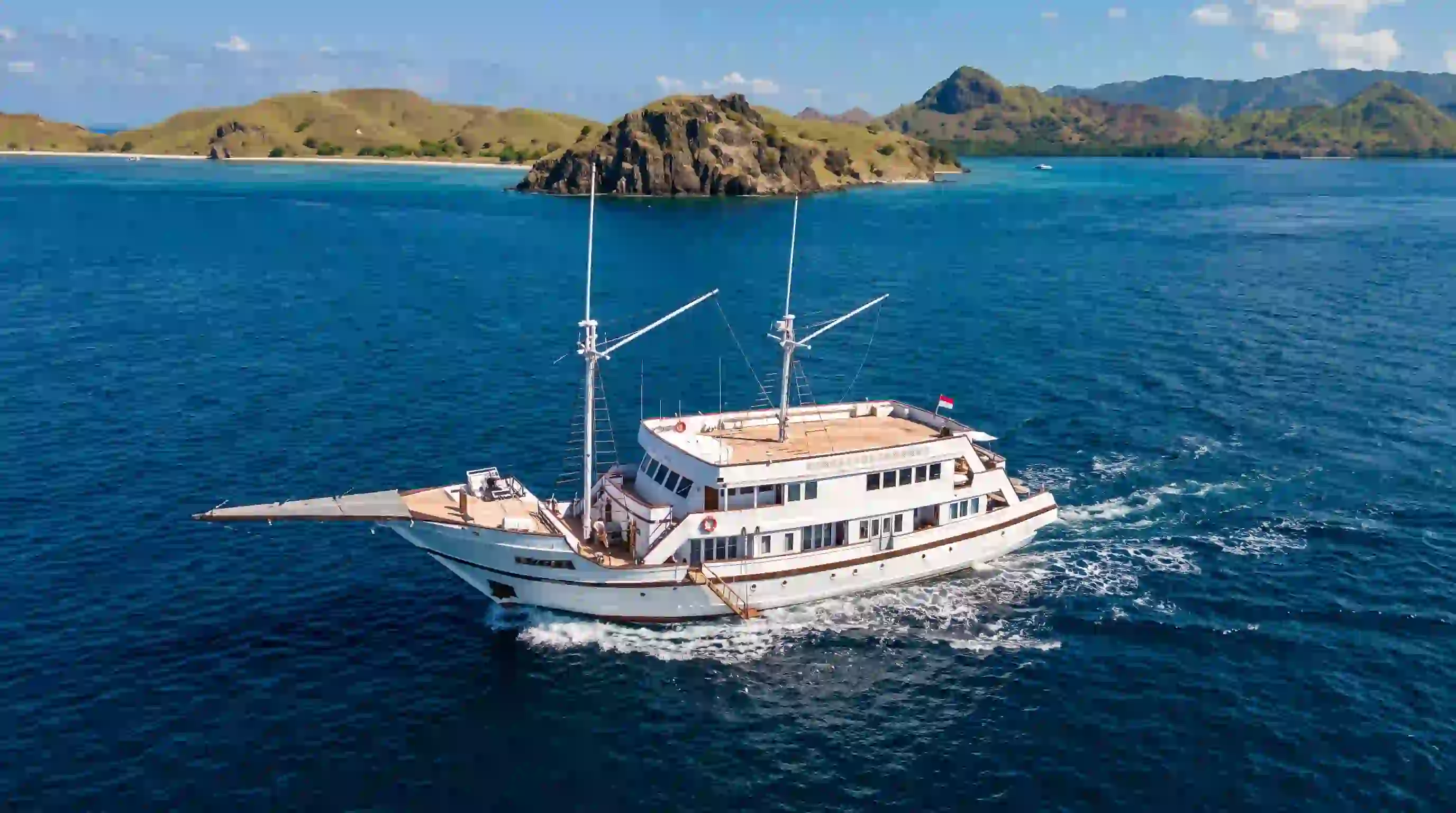
LASHA Raja Ampat: Private Expedition Charters from Sorong
LASHA Raja Ampat expeditions run October through April, departing Sorong...
LASHA Raja Ampat expeditions run October through April, departing Sorong for Wayag, Piaynemo, and Misool aboard a 52.5-metre, ten-cabin luxury...

The Raja Ampat Charter Fleet Worth Flying For in 2027
The Raja Ampat yacht charters most worth flying for in...
The Raja Ampat yacht charters most worth flying for in 2027 are Lamima, with a verified rate of USD 27,000–28,000...
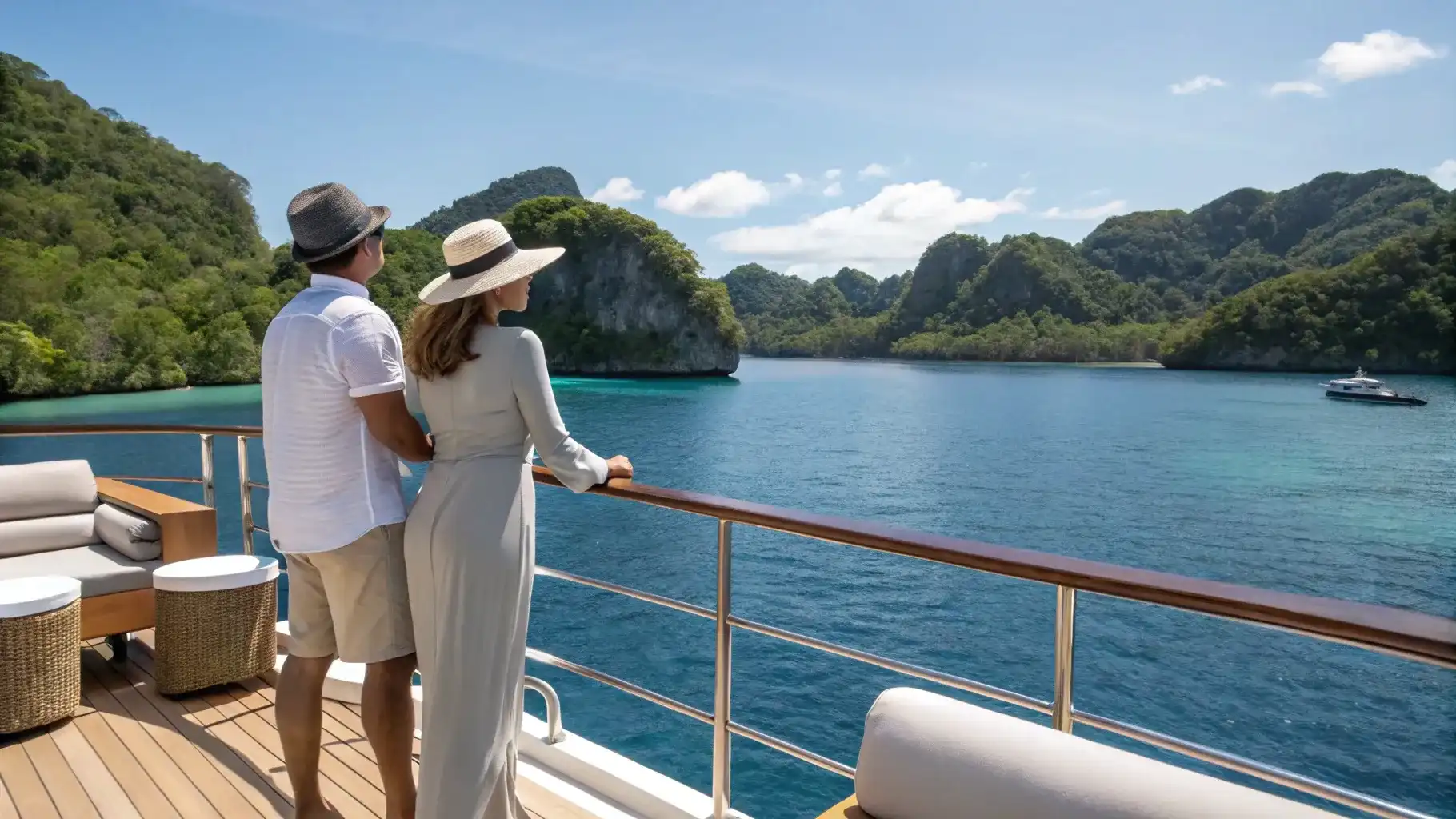
Raja Ampat Honeymoon 2027: The Ultimate Romantic Sailing Guide
Last updated: August 16, 2026 — compiled by the Luxury...
Last updated: August 16, 2026 — compiled by the Luxury Raja Ampat editorial desk, with operational input from crews currently...