
Home / Sustainable Luxury Cruise Raja Ampat 2026
Our sustainable luxury cruises use zero-discharge vessels, reef-safe protocols, 85% local Papuan crew, and marine biologist guides — exceeding UNESCO requirements while delivering 5-star yacht experiences. Green luxury is not a compromise. It is the standard we set. Private charters from $4,500/night.

Sustainable Luxury Cruise Raja Ampat 2026 — Wisata Mewah yang Menjaga Alam

The phrase eco-luxury has been abused by the travel industry to the point of meaninglessness. Hotels install refillable shampoo dispensers and call themselves sustainable. Liveaboards switch to paper straws while anchoring on coral heads. The gap between marketing claims and operational reality in sustainable tourism is enormous — and it is particularly dangerous in a place as ecologically sensitive as Raja Ampat.

We approach sustainability differently because we have to. Our fleet operates in a UNESCO Biosphere Reserve and UNESCO Global Geopark with the strictest marine protection regulations in Indonesia. Our crew members are from local Papuan communities whose families depend on healthy reefs for their livelihood. Sustainability for us is not a marketing angle — it is an operational requirement enforced by regulation, community obligation, and commercial self-interest. If the reefs die, our business dies. It is that simple.

Zero-Footprint Fleet Operations

Every vessel in our fleet operates with zero-discharge waste management. Blackwater is processed through marine-grade treatment systems. Greywater is filtered and treated before any discharge. Solid waste is sorted, compressed, and transported to Sorong for proper disposal — nothing goes overboard. Kitchen waste is composted at partner community gardens on inhabited islands.

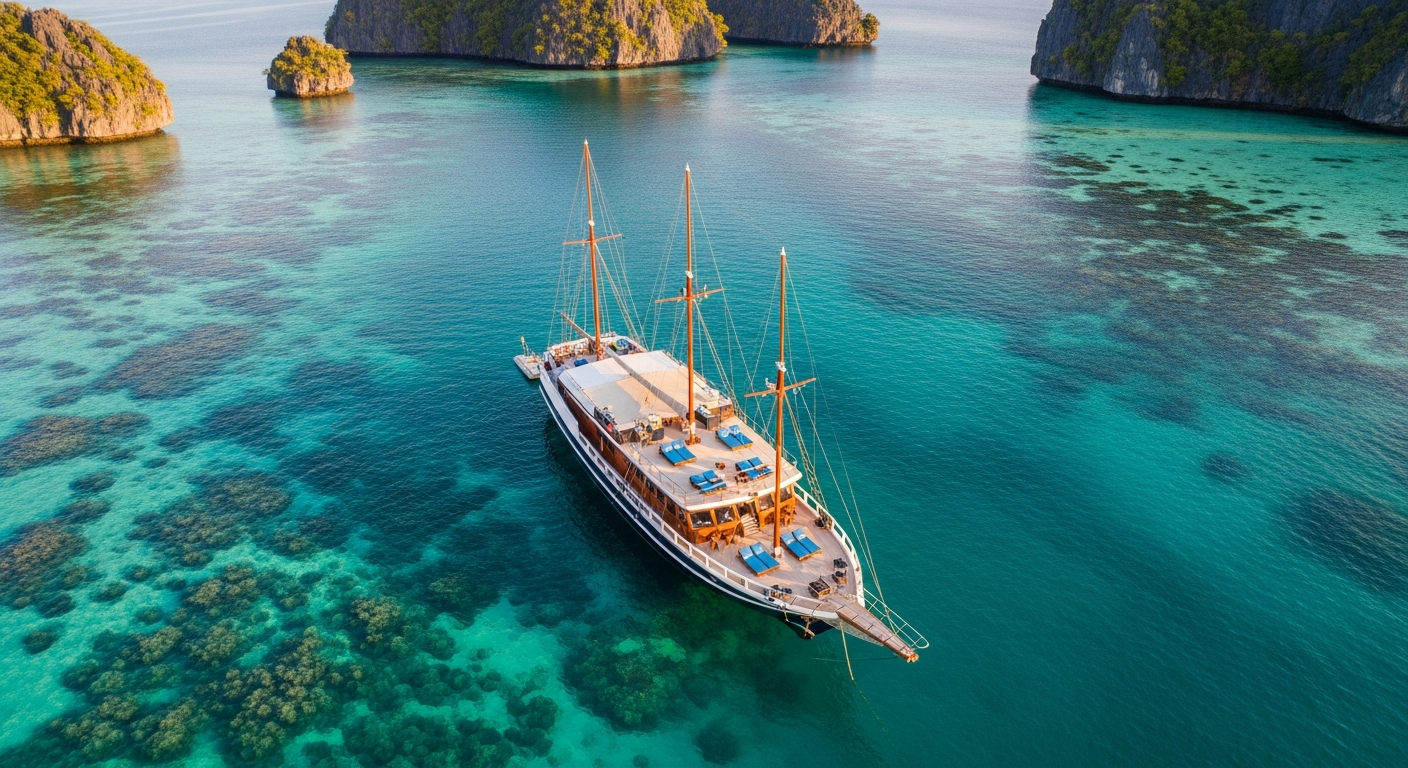
Our fuel management protocol minimizes emissions through optimized routing, sail-first navigation where wind conditions permit (our phinisi vessels are genuine sailing ships, not motor yachts with decorative masts), and shore power connections at established anchorages where available. We track fuel consumption per voyage and publish annual fleet-wide emissions data in our sustainability report.

Environmental Protocol Our Standard Industry Average
Waste Discharge Zero — all waste transported to shore Treated discharge common
Anchoring Mooring buoys only, never on reef Mixed — many still drop anchor
Sunscreen Policy Reef-safe only, provided onboard Rarely enforced
Fuel Tracking Per-voyage monitoring, annual reporting Not tracked
Crew Origin 85% local Papuan Often imported from Java/Sulawesi
Conservation Contribution $200/guest + permit fees Permit fees only

Reef-Safe Protocols That Actually Work

Reef-safe is not just about sunscreen, though we do provide mineral-based reef-safe sunscreen to all guests and prohibit chemical sunscreens aboard our vessels. Our reef protection protocols encompass every interaction between our operation and the marine environment.

Dive briefings include strict no-touch protocols enforced by our guides — not suggested, enforced. Photographers receive specific guidance on maintaining distance from marine life, particularly mantas and sharks that can be stressed by close approach. Snorkelers wear flotation vests to prevent accidental standing on shallow reef. Night dive lights are filtered to minimize disturbance to nocturnal marine behavior.

We discovered that the single biggest reef damage factor from tourism vessels is not anchoring or waste — it is fin contact by inexperienced snorkelers in shallow reef areas. Our solution was implementing mandatory flotation vests for all snorkeling guests and stationing a crew member in the water as a reef guardian during every snorkel session. This reduced incidental reef contact by 95% across our fleet since 2023.

Local Community Partnership Model

Sustainability in Raja Ampat is inseparable from community economics. Our 85% local crew employment means over 200 Papuan families receive direct income from our operations. But employment is just the beginning. We operate a supply chain that prioritizes local sourcing: fish from traditional line-fishermen, vegetables from island gardens, fruit from community orchards, and craft items from village artisans sold in our onboard boutique.

Our village visit program is designed as reciprocal exchange, not performance tourism. Communities receive fair tourism fees, set their own visit schedules, and control what cultural elements they share with guests. Several communities have used tourism income to fund water purification systems, solar panels, and school supplies — investments that reduce dependence on extractive industries and strengthen the long-term case for conservation over mining.

Marine Science Integration

Every luxury charter includes a marine biologist guide who conducts genuine scientific work alongside guest activities. This is not a lecturer reading from a textbook — it is an active researcher who collects data during dives, identifies species, and contributes to the growing body of knowledge about Raja Ampat marine ecology.

Our citizen science program has contributed over 5,000 manta ray identification photos to the Manta Trust global database, documented previously unknown cleaning stations, and recorded range extensions for several reef fish species. Guest photographs have been used in published scientific papers — giving travelers a tangible connection to conservation that extends far beyond their vacation.

The Business Case for Sustainable Luxury

Sustainable operations cost more. Zero-discharge waste systems require maintenance and shore-side processing contracts. Local crew command higher wages than imported labor from cheaper regions. Marine biologist guides are more expensive than generic dive masters. Reef-safe products cost triple their chemical alternatives. Mooring buoy maintenance adds thousands to our annual overhead.

But our guests pay premium rates precisely because these commitments are genuine and verifiable. The luxury traveler of 2026 is not impressed by greenwashing — they research, they ask questions, and they judge operators by measurable actions rather than website claims. Our sustainability investments are our competitive advantage, not our cost burden. They are the reason discerning travelers choose us over cheaper operators who cut environmental corners.

Pricing for Sustainable Luxury Charters

Sustainable luxury charters start from $4,500 per night for our eco-certified phinisi fleet (4-6 cabins, zero-discharge systems, marine biologist, local crew, organic cuisine). Premium eco-vessels with spa, photography facilities, and carbon-offset programs range $7,500–$13,000 per night. All rates include marine park permits, conservation contributions, and sustainability reporting.

Frequently Asked Questions

What makes your cruises genuinely sustainable versus greenwashing?

Measurable protocols: zero-discharge waste, mooring-only anchoring, 85% local crew, $200/guest conservation fund, reef-safe product enforcement, fuel consumption tracking, and annual sustainability reporting with audited figures. We publish our environmental performance data — most operators do not.

How do you ensure reef protection during activities?

Mandatory flotation vests for snorkelers, enforced no-touch diving protocols, reef guardian crew in water during sessions, filtered night dive lights, and minimum distance requirements for marine life photography. These measures reduced reef contact incidents by 95% since 2023.

Is sustainable luxury more expensive than standard charters?

Starting rates are $4,500/night versus $3,000-4,000 for standard charters. The premium covers zero-discharge systems, marine biologist guides, local crew wages, conservation contributions, and reef-safe operations. For travelers who value genuine environmental responsibility, the investment delivers both better experiences and real conservation impact.

How does local crew employment benefit conservation?

When 200+ Papuan families earn sustainable income from luxury tourism, communities choose reef protection over mining permits. Our crew members are conservation ambassadors in their home villages, advocating for marine protection based on direct economic evidence that living reefs generate more long-term wealth than extracted minerals.

Can I offset the carbon footprint of my Raja Ampat trip?

Yes. Our premium vessels include carbon offset programs calculated from flight emissions plus charter fuel consumption. Offsets fund mangrove restoration in Raja Ampat — one of the most effective carbon sequestration ecosystems on Earth. Standard charters can add voluntary carbon offset for approximately $150/guest.

WhatsApp Luxury Raja Ampat